The New Bali Build: How to Source Materials That Last (and Why It Matters)
By Des Res Bali
Quick heads up: We’re not contractors, engineers, or materials scientists. Building standards, availability, and pricing in Bali shift fast — and what works in one location or microclimate may not work in another. This guide is editorial, experience-led, and research-backed, but it’s not technical advice. Always sanity-check with qualified local pros, visit suppliers in person, and test materials before committing.
Bali isn’t short on beautiful buildings. It’s short on buildings that age well.
Over the past decade, development has accelerated faster than regulation, taste, or infrastructure. Clifftop villas appear overnight. Imported finishes peel within a year. Concrete boxes dressed as “Mediterranean escapes” sit awkwardly between temples and rice fields.
But there’s another lane quietly emerging — one rooted in durability, local craft, and materials that actually belong here.
If you’re building, renovating, or designing in Bali in 2026, sourcing is everything. Not just where you buy, but what you choose to build with in the first place.
This is the shift: away from aesthetic-first, toward climate-aware, material-smart design.
Start with longevity, not Pinterest
The biggest mistake in Bali builds isn’t budget. It’s imitation.
Mediterranean plaster looks romantic — until humidity cracks it. Imported marble reads “luxury” — until it stains, sweats, and becomes a maintenance nightmare. Trend-driven villas photograph beautifully and age terribly.
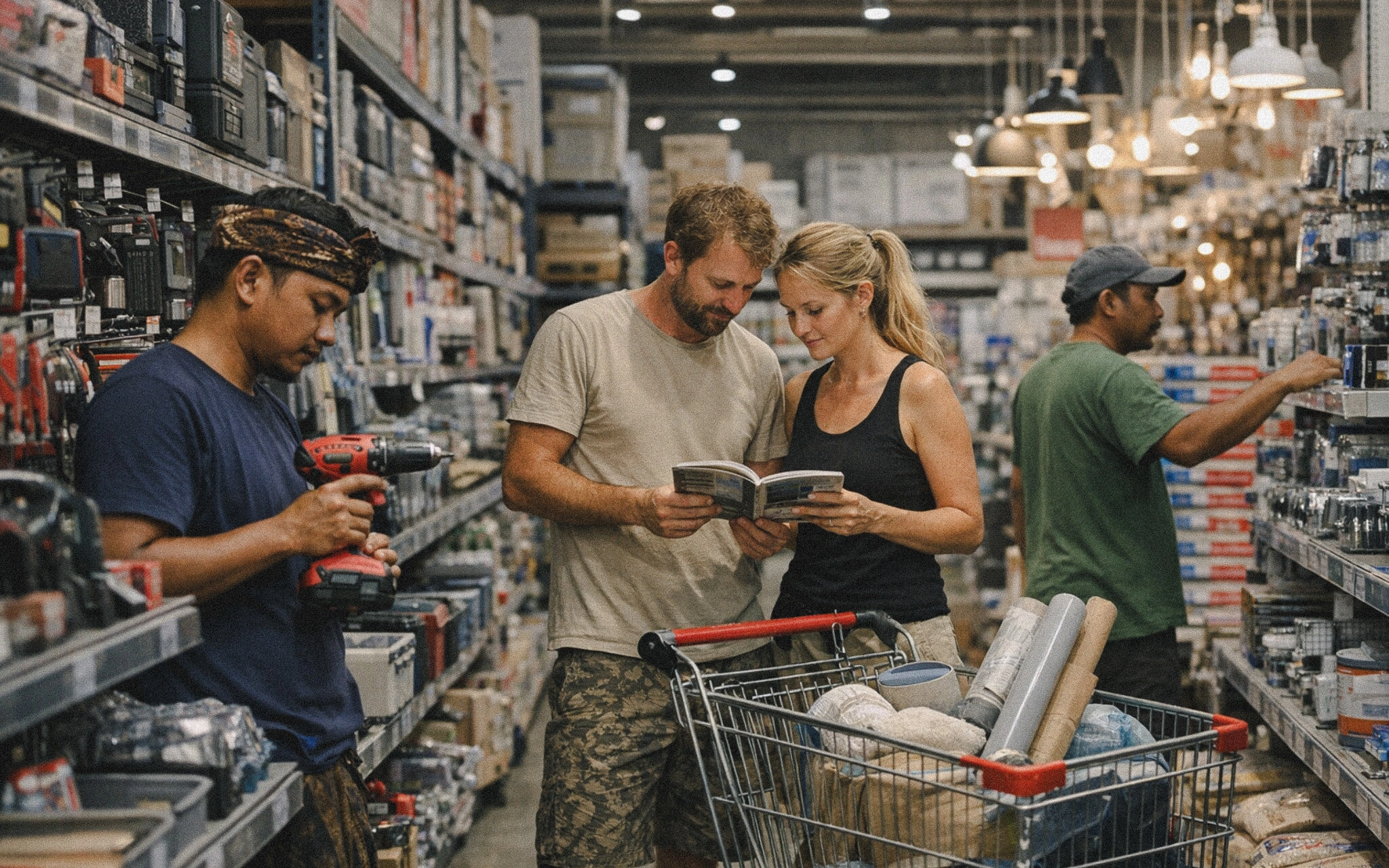
AZKO (formerly Ace Hardware Indonesia) The nationwide chain rebranded in 2025 after its licensing agreement ended, and remains one of the most accessible sources for tools, fixtures, lighting, and everyday build supplies across Indonesia.
Mitra10 Still one of the most reliable large-format home improvement retailers for construction materials, plumbing, electrical, and finishing components.
Krisbow ecosystem Widely used for tools and mechanical equipment across Indonesian construction projects.
These aren’t glamorous — but every serious build touches them.
Bali-based building suppliers
Bali Building Solutions A one-stop distributor covering categories from cement and flooring to electrical, adhesives, and hardware — often used by contractors managing full builds.
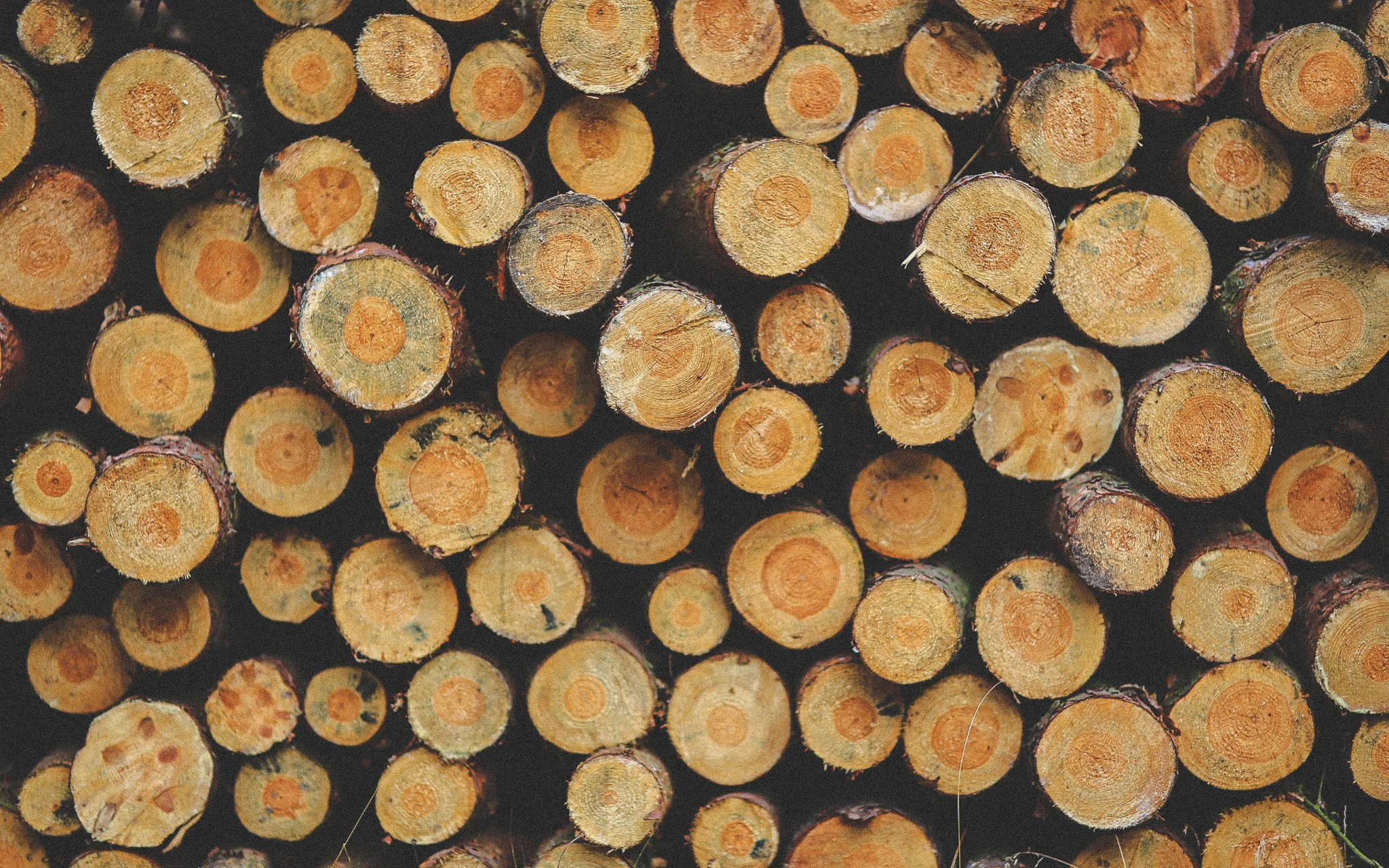
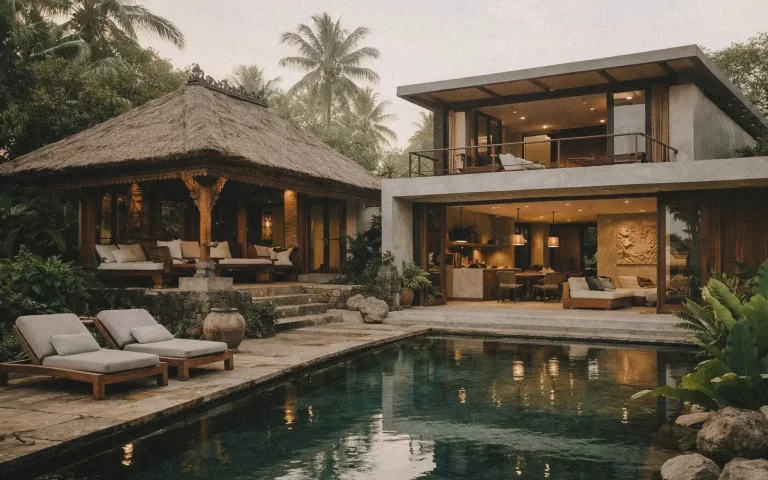
Local material yards (Sukawati, Gianyar, Tabanan) Teak, ironwood, bamboo, reclaimed doors, stone slabs, and custom carving workshops still come from these networks — not from showrooms.
This is where the real sourcing happens: relationships, not catalogs.
Structural materials & national supply chains
Semen Indonesia (SIG) The country’s largest state-backed building materials group supplying cement, aggregates, and construction solutions nationwide.
Behind every villa, hotel, and commercial space — this infrastructure is doing the heavy lifting.
The materials that make sense here
Not the ones that photograph best. The ones that endure.
1) Reclaimed hardwoods
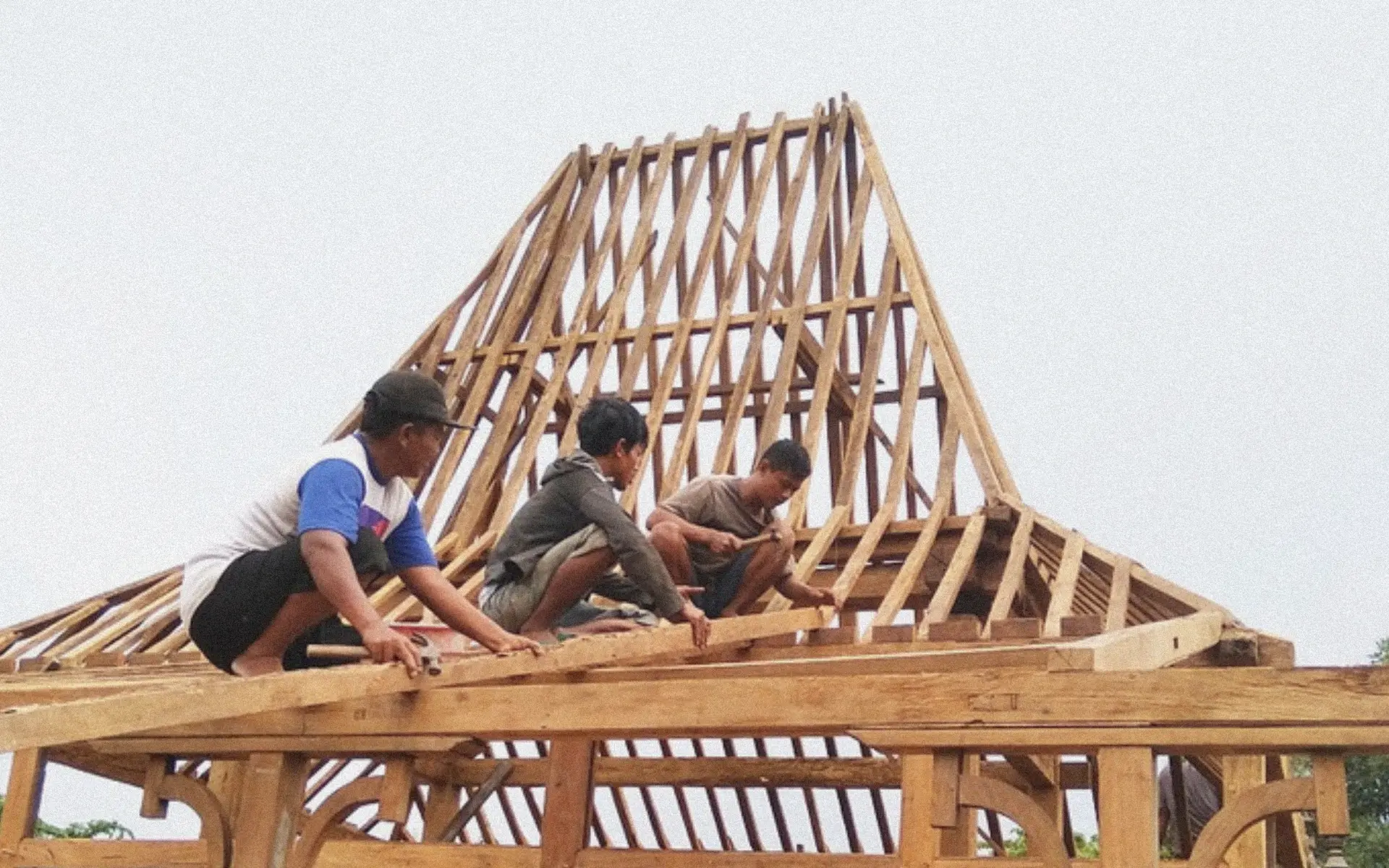
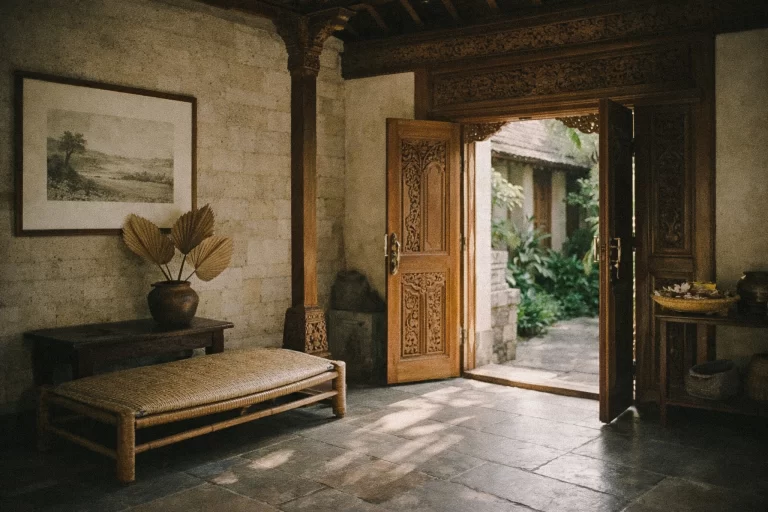
Old joglo beams, doors, and structural timber outlast most new imports. Properly treated teak and ulin perform in humidity and insects.
Reclaimed timber is becoming a primary material — not an accent
Across high-end residential and hospitality builds, reclaimed wood is no longer just decorative. It’s structural, climate-smart, and significantly more durable than many imported alternatives.
Suppliers like Kaltimber — known for reclaimed and responsibly sourced hardwoods used in architect-led projects — are part of a broader shift toward materials that already understand tropical conditions. These timbers move less, age better, and reduce the need for constant replacement.
This isn’t nostalgia. It’s performance.
2) Lime & mineral plasters
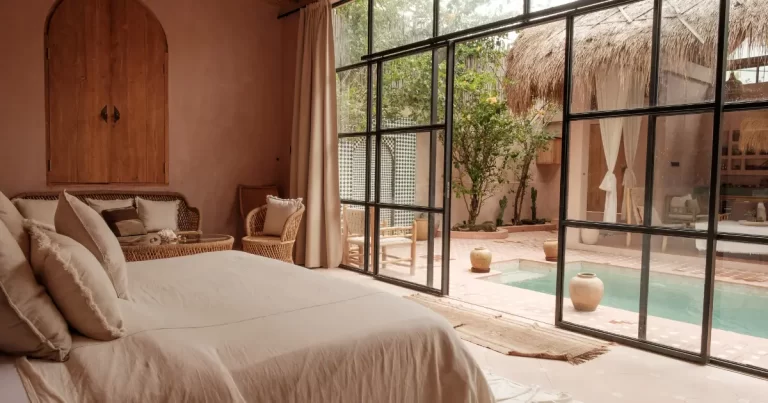
They breathe. Cement traps moisture; lime releases it. That’s the difference between a wall aging gracefully vs moulding.
3) Terrazzo & poured surfaces
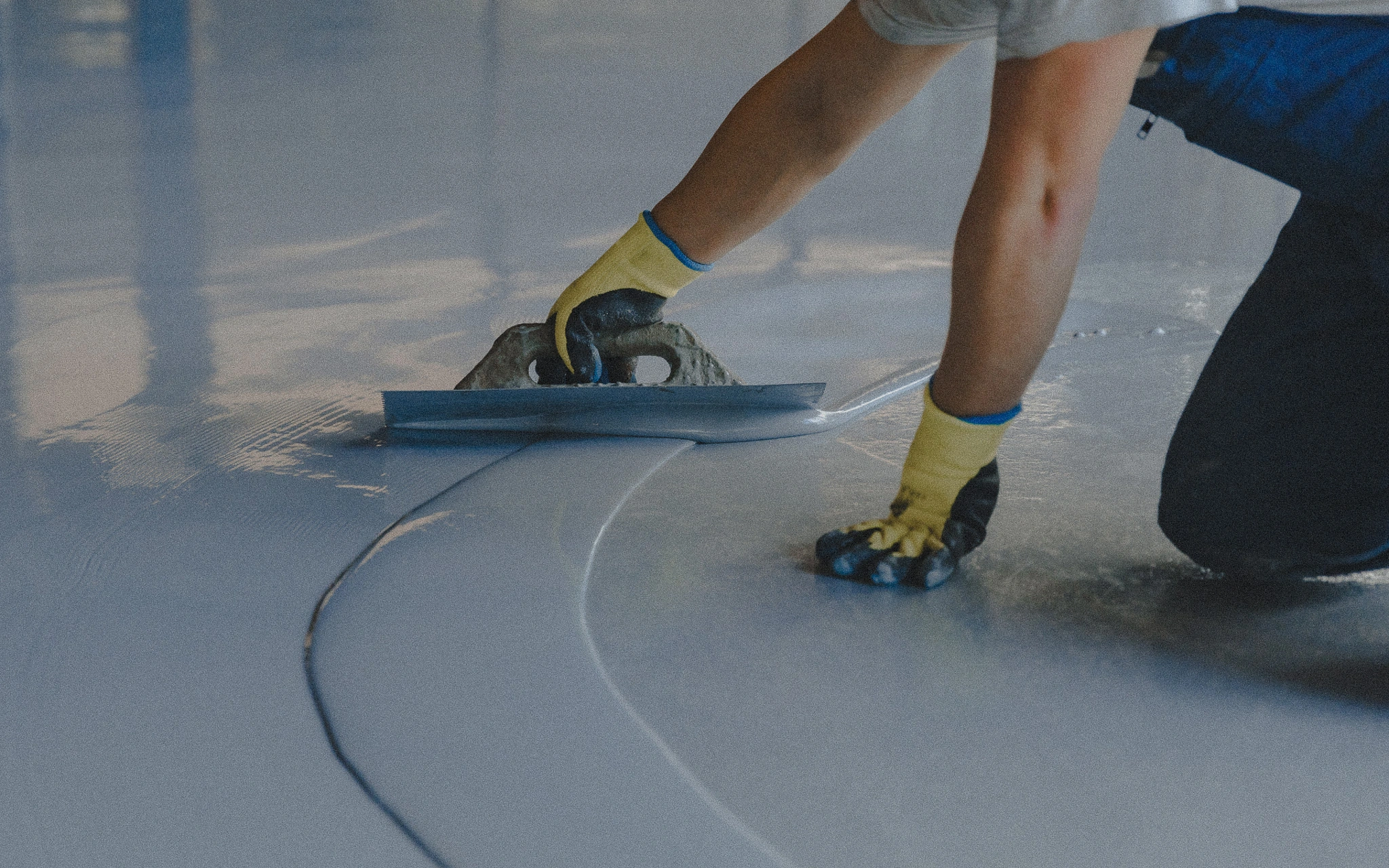
Not the Pinterest version — the real, heavy, site-poured kind. Repairable, local, climate-tolerant.
4) Volcanic stone & paras
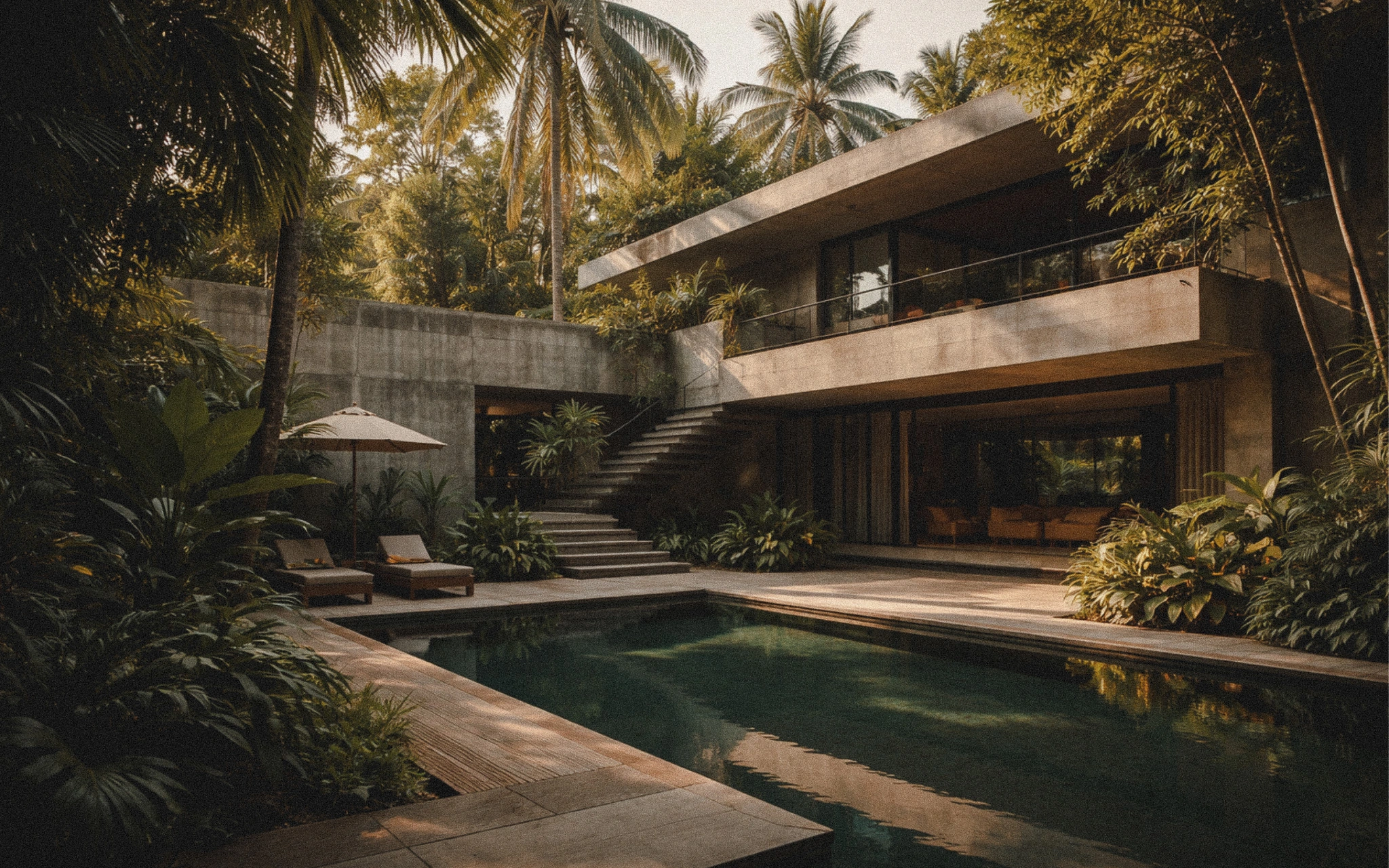
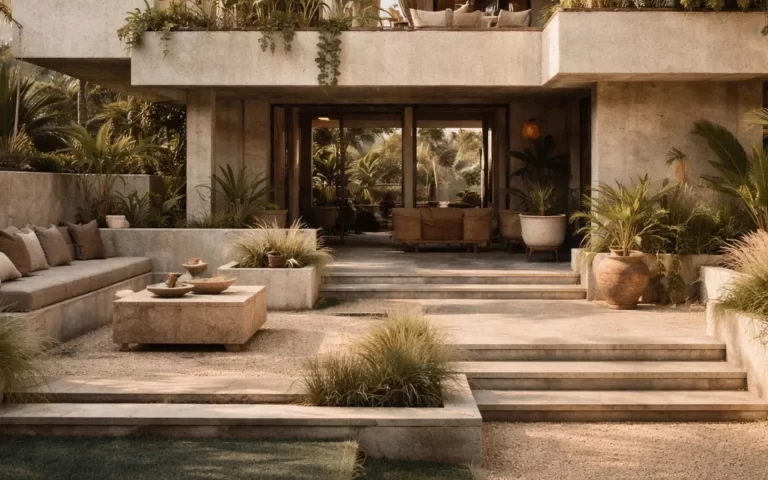
Local stone regulates temperature and integrates visually into the landscape.
5) Bamboo (engineered, not decorative)
When structurally treated and designed correctly, it’s one of the most sustainable materials in Southeast Asia.
6) Renovation over demolition
The smartest builds right now aren’t new. They’re adaptive reuse — upgrading structure, airflow, and materials instead of starting from zero.
Sustainability in Bali isn’t branding — it’s logistics
There’s no comprehensive waste system. Shipping is expensive. Imports carry environmental cost. Labor skill varies widely.
So “sustainable” here doesn’t mean greenwashing.
It means:
fewer imported finishes
more local fabrication
materials that don’t need replacing every two years
designing for repairability
A build that lasts 25 years is more sustainable than a “green” villa that needs full resurfacing in five.
Execution matters as much as sourcing
Access to good materials means nothing without teams that know how to build with them.
Contractors working alongside Bali’s architecture studios — including firms like Bali Construction, frequently involved in high-spec residential and hospitality projects — play a key role in translating material decisions into long-term durability.
In Bali, the gap between a build that lasts and a build that deteriorates quickly often comes down to installation, detailing, and climate literacy — not the material itself.