KALTIMBER ON RECLAIMED IRONWOOD, HONEST SOURCING, AND WHY IMPERFECTION IS THE WHOLE POINT
“Imperfection is our perfection.”
Guillaume Carnevale says it matter-of-factly. No explanation needed.
His company, Kaltimber, reclaims tropical hardwoods from decommissioned structures across Kalimantan and repurposes them for homes, hotels, and architectural projects across Bali and internationally. The wood arrives with history already built into it: weathering, tonal variation, nail marks, decades of exposure.
And in a construction market that increasingly prioritises shine over substance, that feels quietly radical.
“People like the idea of reclaimed wood, but not always what it truly implies.”
“There are still many illegal sources of wood in Bali. And a lot of resellers who are not transparent about where their material comes from.”
Beautiful homes are going up across the island with decks, floors, ceilings, and pergolas sourced from supply chains that aren’t always transparent. It’s a reality of the market that often goes unspoken.
For Kaltimber, traceability sits at the core of the process. The company sources exclusively from structures genuinely slated for demolition, salvaging old-growth ulin ironwood and processing it into decking, flooring, panelling, ceilings, and custom architectural components. The company also supports reforestation efforts through its partnership with Replant World, helping fund tree-planting initiatives in Indonesia.
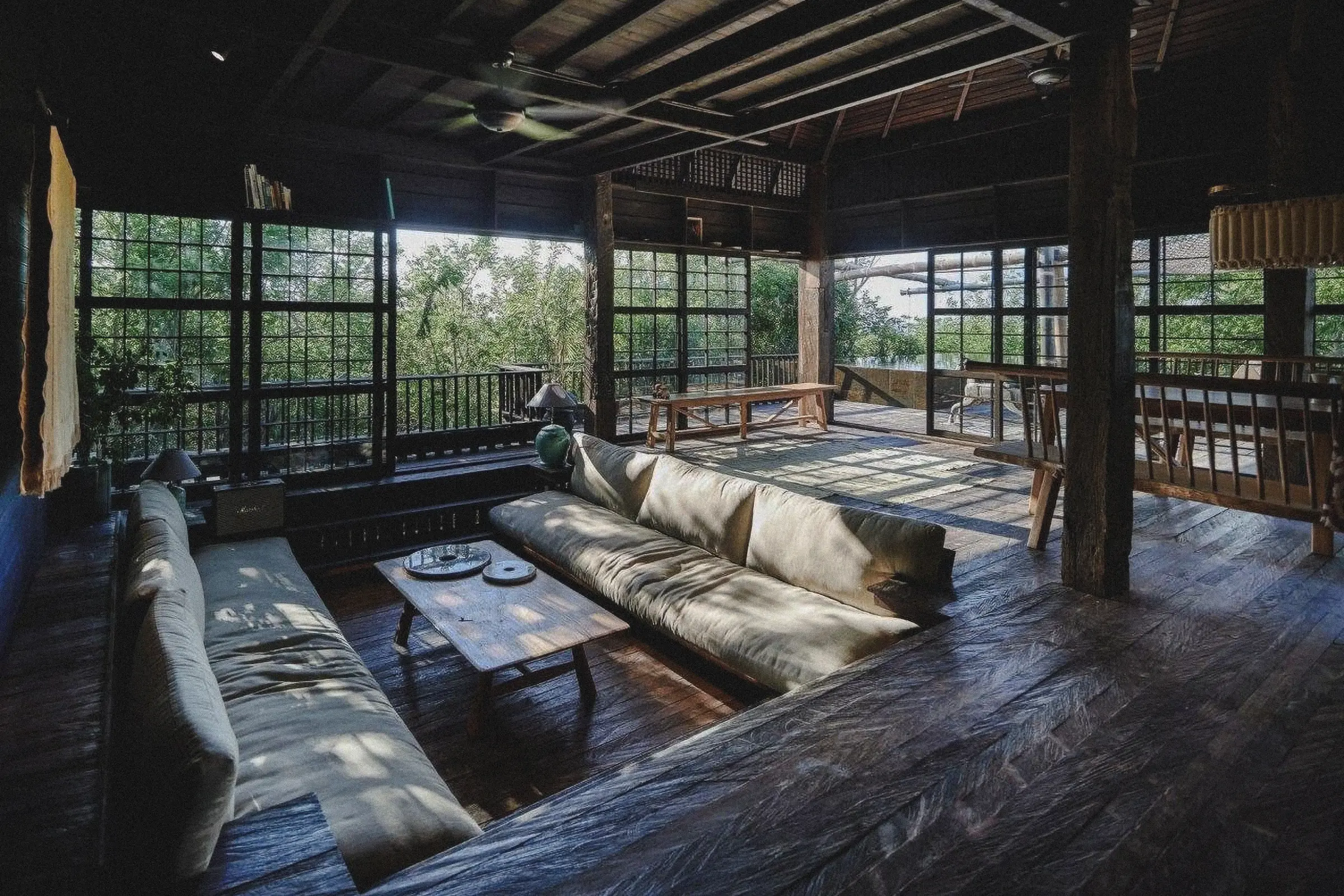
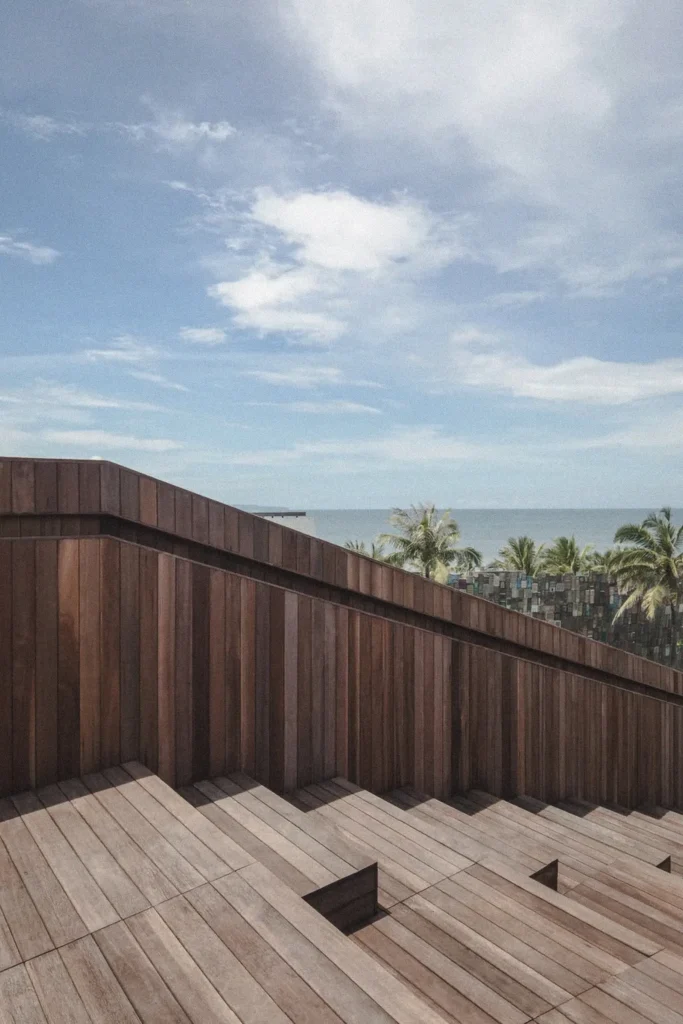
The Barn by Alexis Dornier, Uluwatu — reclaimed ulin ironwood by Kaltimber | Photo by Kie
There’s also the question of which ulin is actually being used.
“In Indonesia, you have different types of ironwood — from Kalimantan, Sulawesi, Sumatra — and they are not equal,” Guillaume says. “Ulin from Sulawesi is often sold simply as ‘ulin,’ but the quality is significantly lower than Kalimantan ulin.”
Then there’s the imitation problem.
“There’s confusion between new wood, reclaimed wood, and what’s called rendaman,” he explains. “Rendaman is basically new ulin that’s artificially aged to look like reclaimed, but it’s not.”
The distinction matters. Ulin, commonly called ironwood, is one of the most durable tropical hardwoods in the region: dense beyond reason, naturally resistant to humidity, rot, termites, and even marine conditions. Built for a climate like Bali’s.
“So when people talk about longevity, it’s not just about ‘wood.’ It’s about where it comes from, how it was processed, and how honest the sourcing is.”
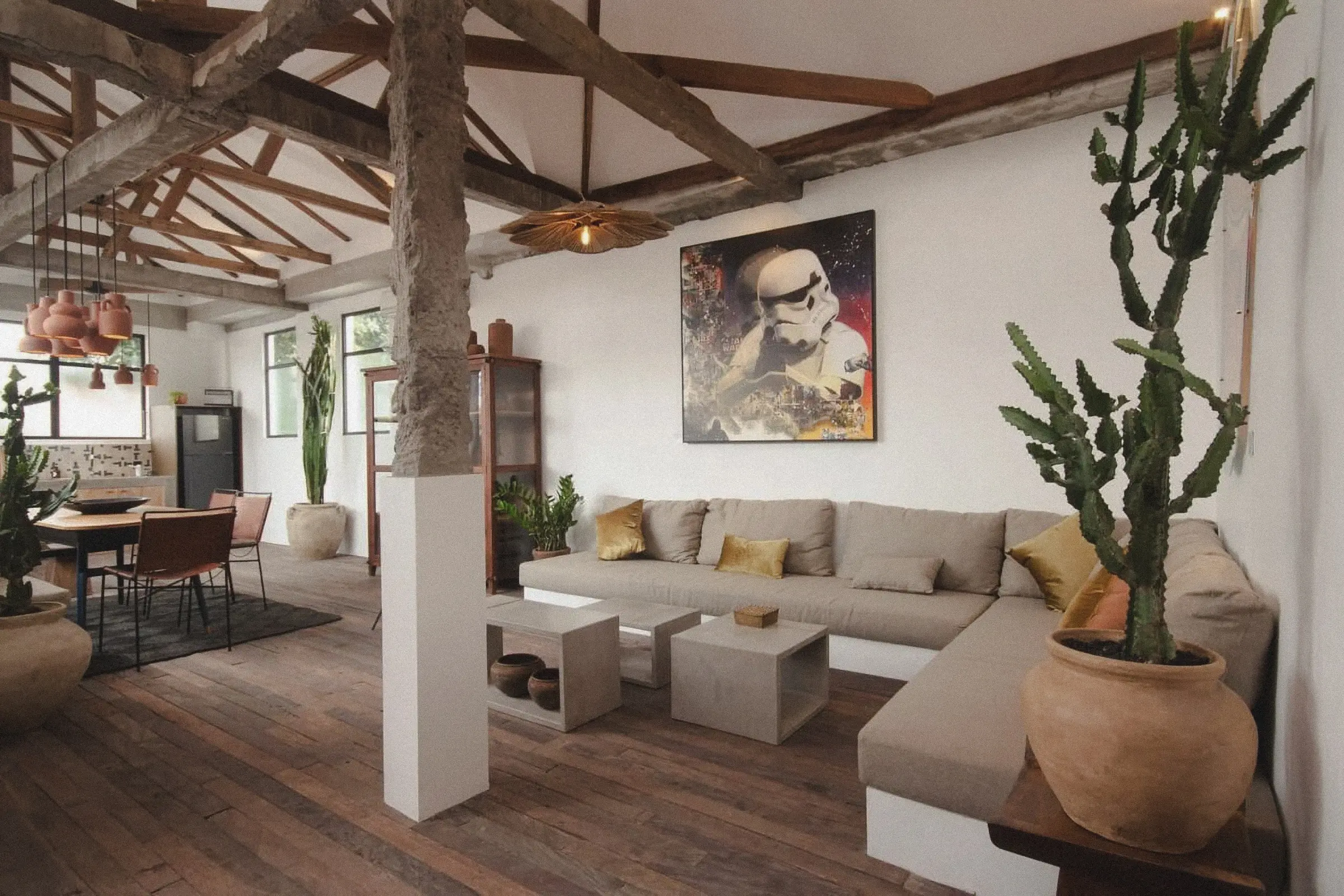
Mercato, Berawa — recycled ulin rustic flooring by Kaltimber | RE | VIVE + Mary Kay | Photo by Taralynn Disher
The Marks Stay Visible
People are drawn to the idea of history and texture, but often still want the finish to look perfect. Uniform. Predictable.
“Reclaimed wood comes with history, with marks, with imperfections — and for us, that’s exactly where its beauty lies.”
A lot of what’s being built now looks good fast. That doesn’t always mean it lasts.
Bali’s architectural language has always evolved. Traditional forms meet new ideas, local materials sit alongside global influences, and contemporary architecture continues to reshape the island. Change itself isn’t the issue.
What feels increasingly rare is a willingness to work with material as it is, rather than forcing it into uniformity. To let something weathered remain weathered.
Kaltimber’s material arrives at a project already carrying a previous life. Nail marks, tonal variation, decades of exposure. Traces of time that stay visible in the finished work rather than being sanded out of it.
And some of Bali’s most interesting architects are leaning into exactly that.
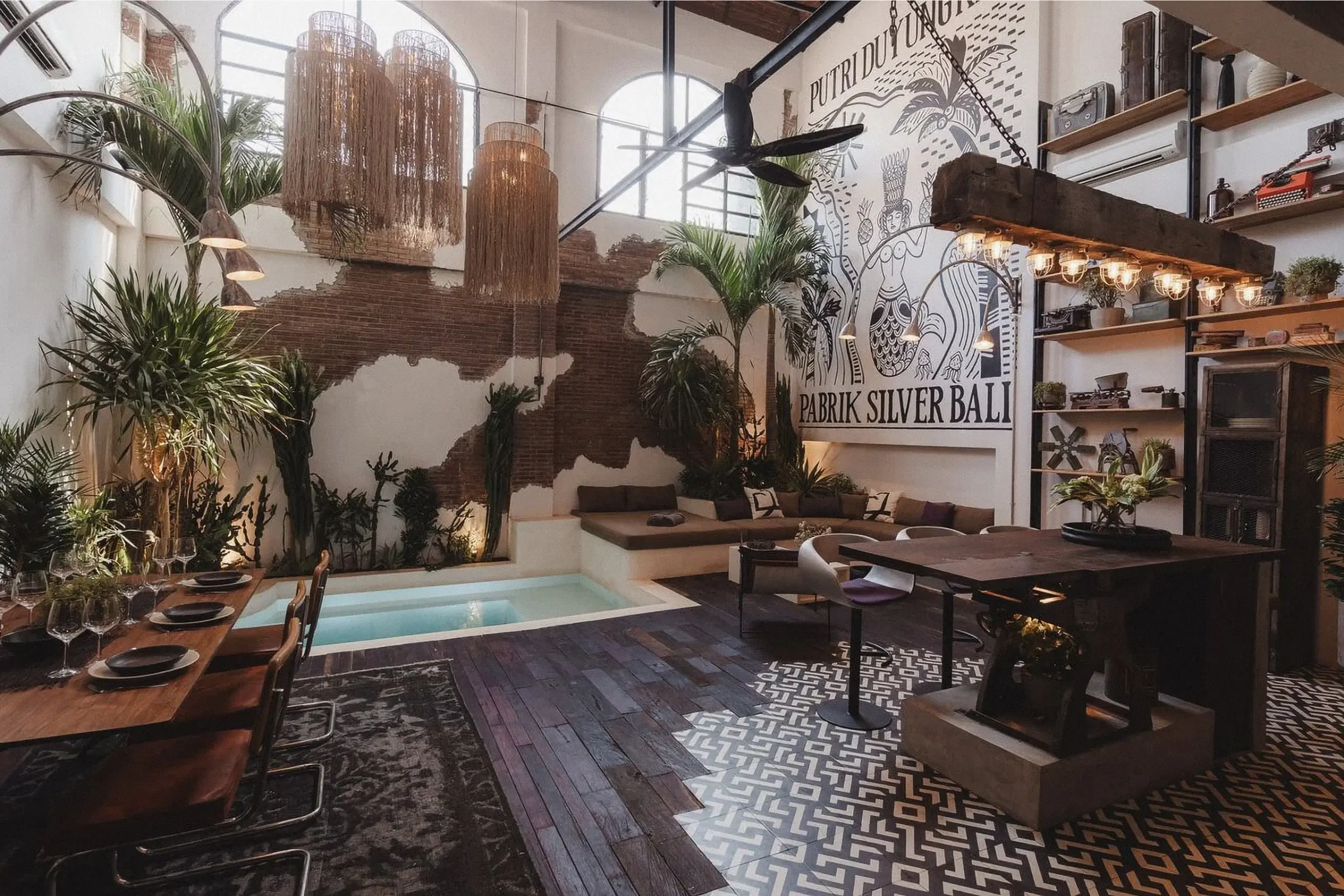
The Silver Factory, Berawa — reclaimed ulin flooring by Kaltimber | RE | VIVE + Mary Kay | Photo by Taralynn Disher
Designing With the Material, Not Against It
“We love when reclaimed wood is used in a clean, contemporary way,” Guillaume says. “That contrast between very old material used in very modern design is something we find really powerful.”
But the aesthetic is only part of it.
“We love when the project is designed to fit the wood, rather than forcing the wood to fit the project.”
That shift changes the relationship between architecture and material entirely. Timber becomes part of the design language rather than a surface treatment applied at the end. The irregularities aren’t hidden or sanded away. They’re incorporated into the design itself.
The result is architecture that feels grounded without trying too hard to feel “natural.” Contemporary, but still connected to the landscape around it.
Not nostalgic. Not artificially rustic. Just honest about where its materials came from and what they’ve already been through.
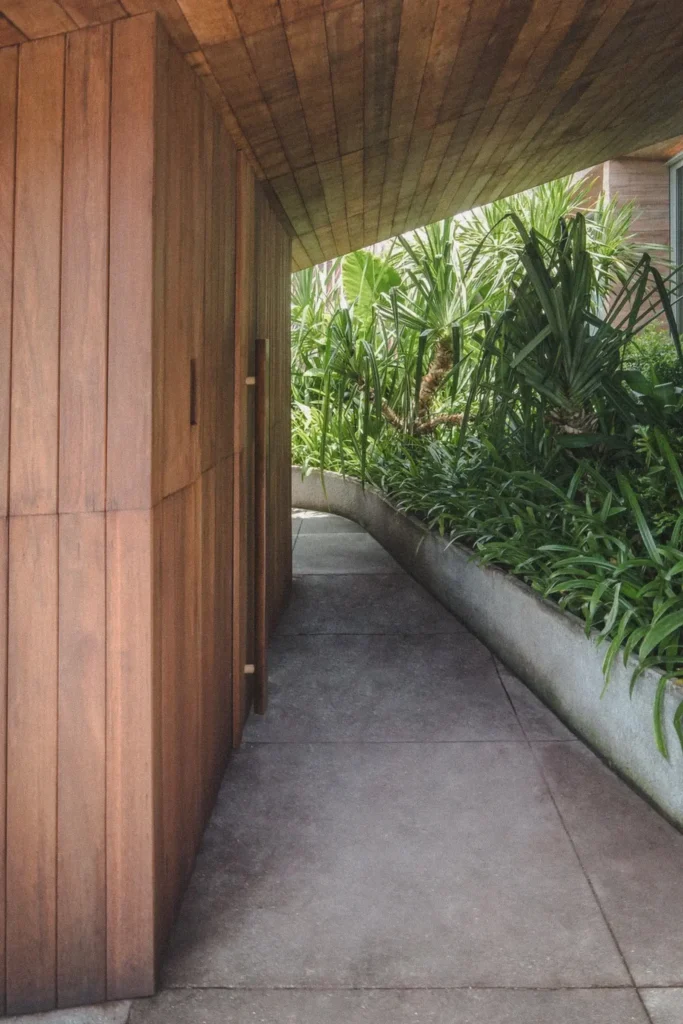
Potato Head, Seminyak — FSC recycled ulin decking and recycled ulin lamella by Kaltimber | Design architect OMA, architect of record Andra Matin | Photo by Kie
Potato Head, Seminyak — FSC recycled ulin decking and recycled ulin lamella by Kaltimber | Design architect OMA, architect of record Andra Matin | Photo by Kie
The Human Side of Craft
When asked about standout projects, Guillaume redirects.
“We’ve been very lucky,” he says. “There are a lot of talented architects and designers here.”
But the real credit, he insists, belongs elsewhere.
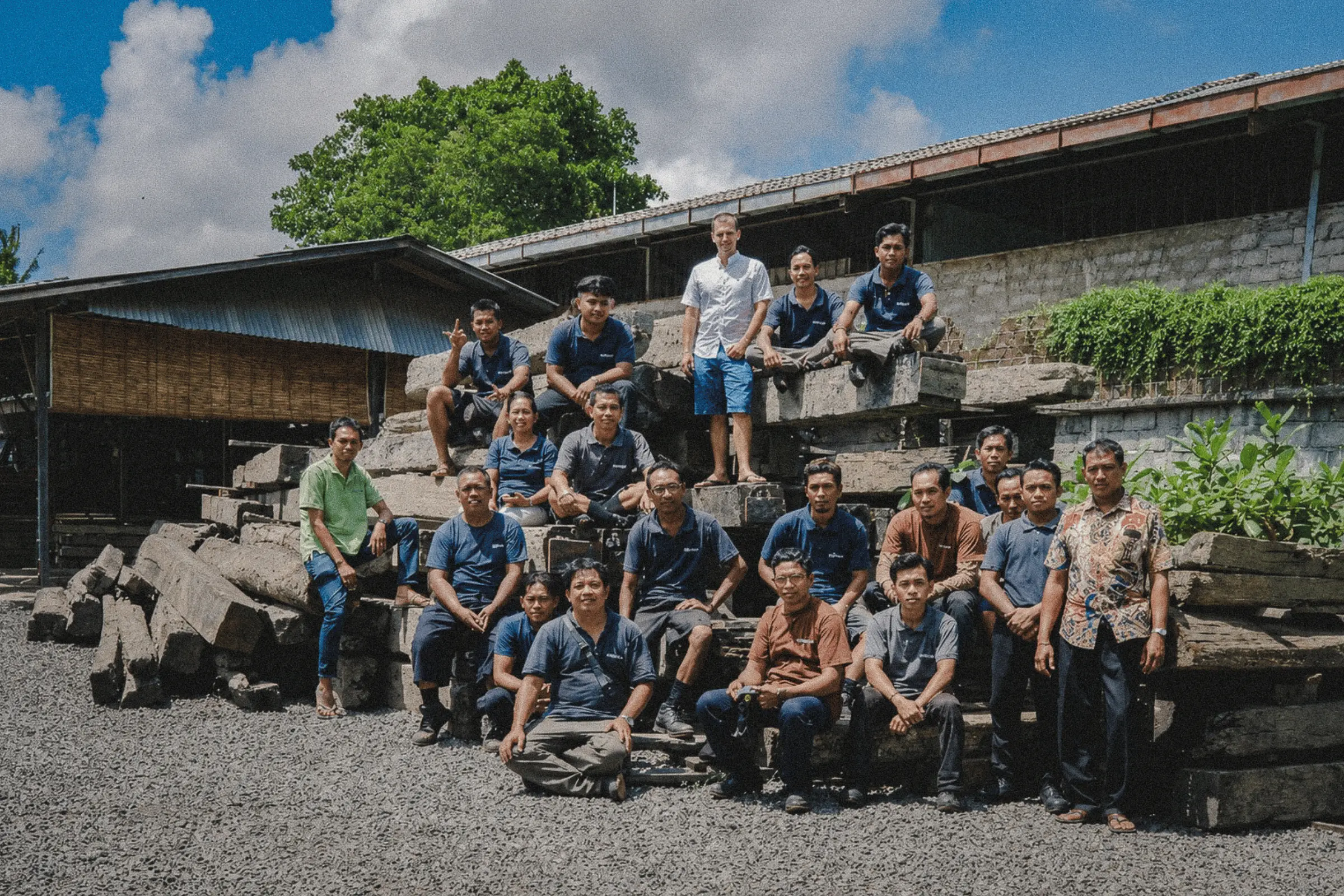
“I’d give a big shoutout to our production team. They’re the ones behind the scenes making everything happen.”
It’s clear this isn’t just a business to him.
“Honestly, it got to a point where I feel like I haven’t worked a single day in the past 10 years.”
“I often jokingly say we’re the ‘Oompa Loompa’ of the reclaimed ulin world — turning raw, heavy, imperfect material into something precise and beautiful.”
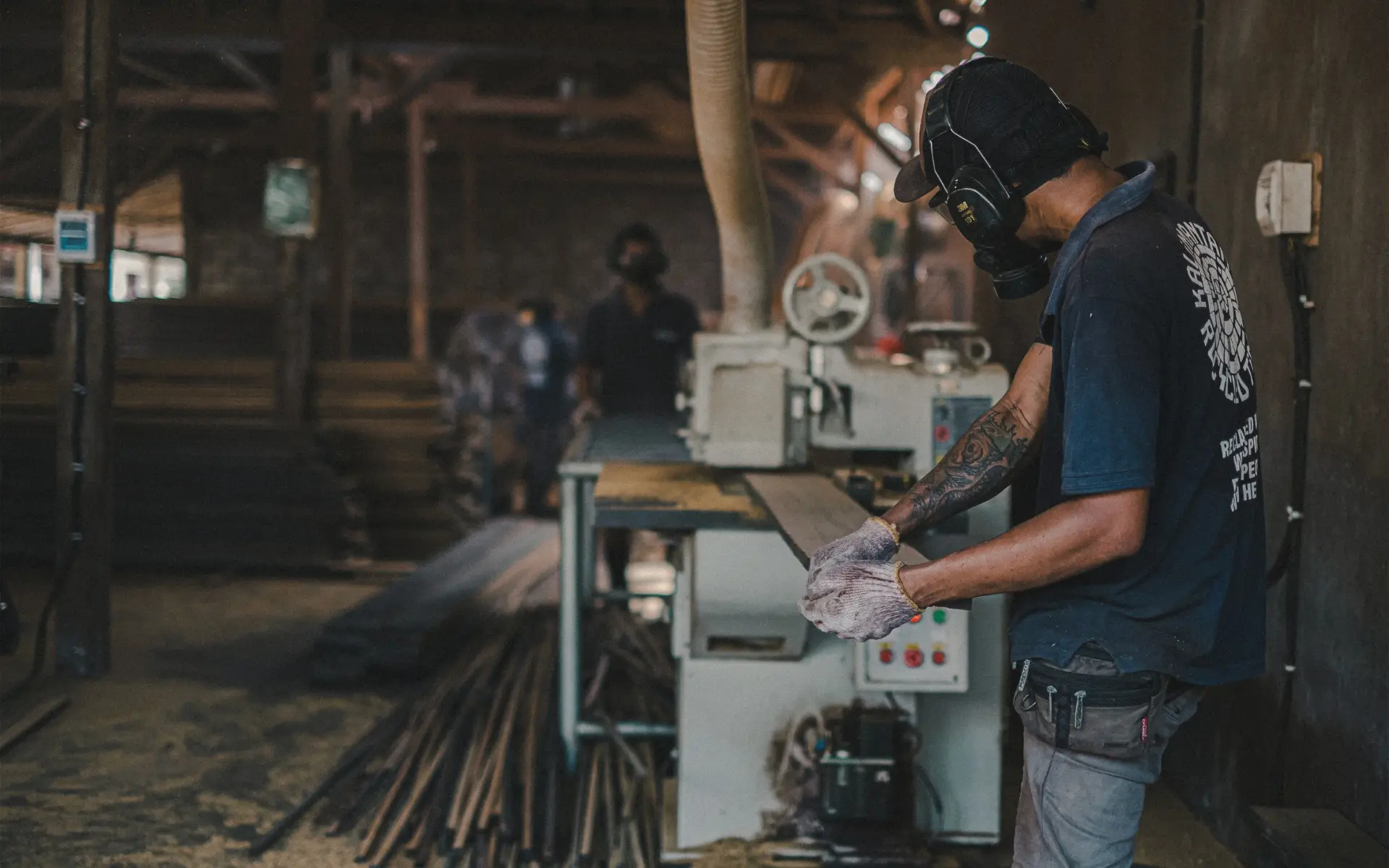
Inside Kaltimber’s Bali operation, reclaimed ironwood is milled, stabilised, processed, and finished by hand. The work is physical, highly skilled, and time-intensive, with much of the process happening behind the scenes long before the material arrives at a finished project.
And maybe that’s part of what gives the work its weight. The amount of care, labour, and craftsmanship required to shape the material into something lasting.
A member of the Kaltimber team working with reclaimed ulin ironwood
Final Thoughts
Bali has never been a place disconnected from nature, material, or craft. But as the island keeps building, the question of what we build with — and how honestly — feels increasingly worth asking.
Reclaimed ironwood is one answer worth paying attention to.
Not pristine. Not disposable. Not pretending to be something it isn’t.
Just material that’s already lived a life, carrying that history into whatever comes next.