Five Days at Jia Curated (And Still Not Enough Time)
By Des Res Bali | August 2026
We just spent five days immersed in our first ever Jia Curated, and it was really pretty special.
In fact, we’re struggling to think of anything quite like it that we’ve experienced in Bali before. More than 150 local and international exhibitors and over 250 participating brands, five days of talks, installations, architecture, furniture, objects, food, materials and ideas—all celebrating design from Bali and far beyond its borders.
This year also brought a new backdrop—a stretch of beachfront on Pengembak Beach in Sanur, pine trees and mangroves on one side, open water on the other. It showed up in the work more than you’d expect.
This year’s theme was Nature Weave, exploring the relationship between nature, culture and design. And it was everywhere. Bamboo, reclaimed timber, rattan and upcycled plastic appeared throughout the grounds, but so did bigger questions about how we build, what we keep, what we throw away and how much attention we’re actually paying to the places we’re designing for.
There was also an incredible amount of eye candy. Everywhere we looked, something had been considered. Not just the objects on display, but the installations themselves—beautifully executed spaces that made you want to wander in, sit down and stay awhile. And we did. Frequently.
Ideas Worth Sitting Down For
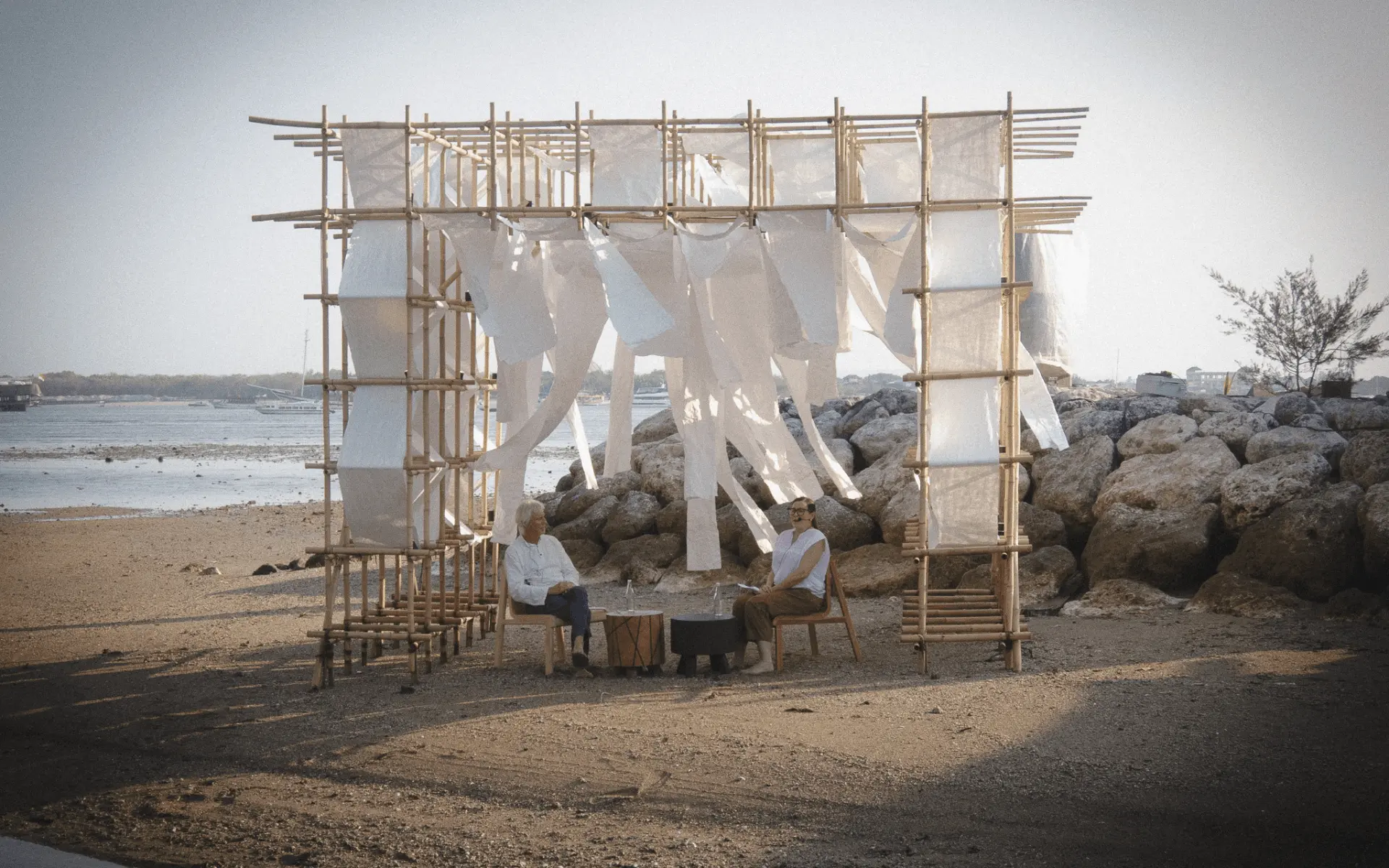
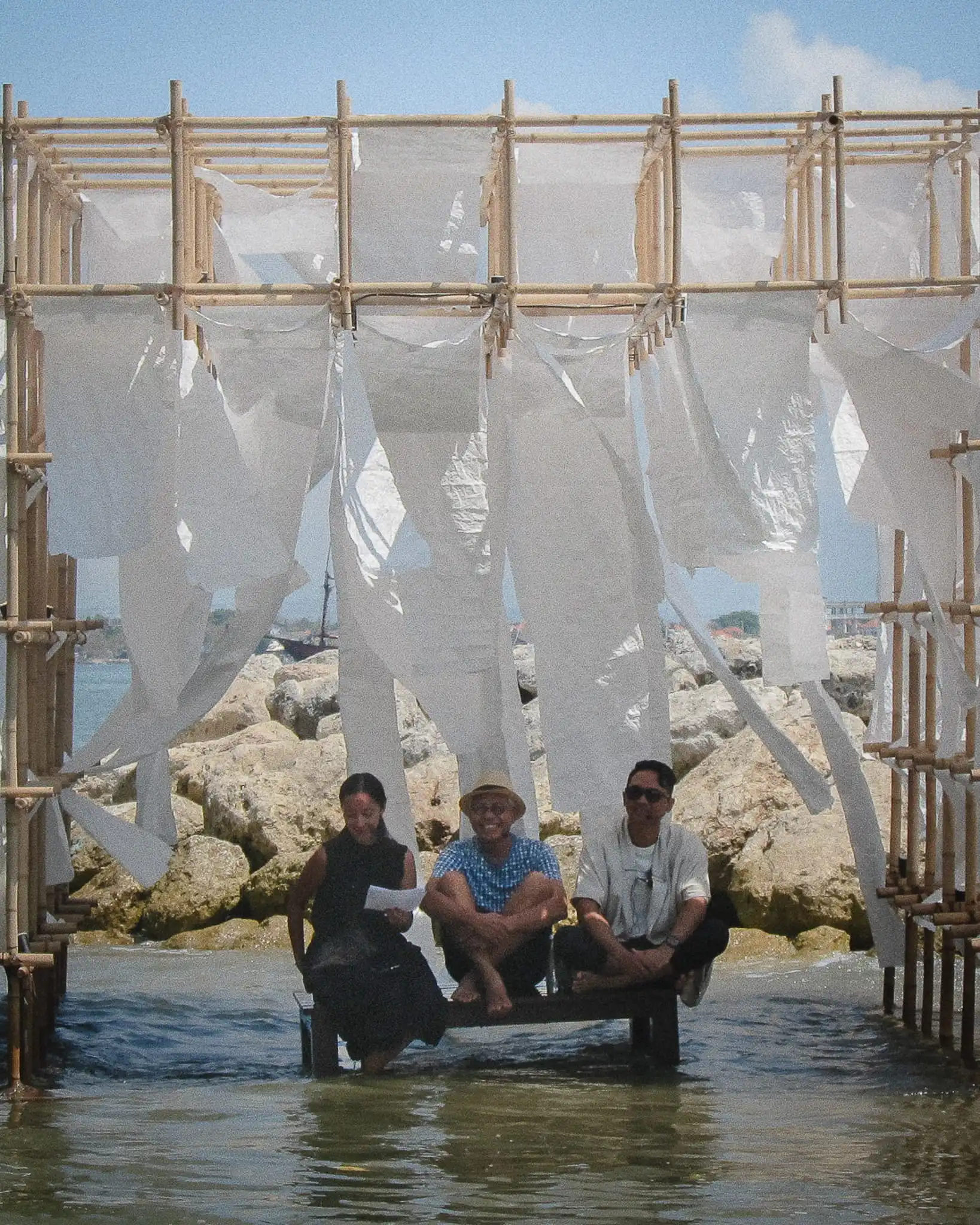
Our first proper panel of the week brought together Charmaine Chan, Design Editor at the South China Morning Post, and Suzy Annetta of Design Anthology on Jia’s ridiculously photogenic beachfront stage—a bamboo structure draped in billowing white fabric, perched right at the water’s edge and something of a visual landmark for the event.
They started by inviting emerging designers in the audience to pitch them. This immediately set the tone for a generous conversation about design publishing in Asia, what editors actually look for, the gap that still exists for emerging regional designers, and, reassuringly, why print is very much not dead.
Over the next few days we heard from architects and designers including Popo Danes, I Ketut Dirgantara, Fiona Lynch and Peter Stutchbury. Nature Weave ran through the programme, but so did a few ideas that kept resurfacing: working with what already exists, understanding landscape, staying curious and resisting the urge to let technology do all the thinking for us.
Popo Danes’ talk also happened to coincide with a particularly enthusiastic high tide. By the time the conversation started, the water had reached the stage, so the speakers simply rolled up their trousers, waded through the water and carried on. Very Bali.
He spoke candidly about the speed of development on the island and the lack of a clear direction for where Bali is going.
“Bali itself must be a curator,” he said.
It’s an idea that stayed with us. What is good for Bali? How much can the island carry? What deserves to be preserved, restored or adapted rather than simply knocked down and replaced?
Fiona Lynch also spoke about the value of renovation and reuse, as well as imagination and curiosity, particularly for younger designers. Go places. Look at things. Keep learning.
And Australian architect Peter Stutchbury kept returning to landscape as something legible: something that communicates, if we’re willing to pay attention to it.
“Some of the best buildings I’ve been in are the ones that aren’t decorated,” he said. That one stuck with us too.
Inevitably, AI entered the conversation. More than once. The general feeling among the speakers seemed neither breathlessly enthusiastic nor particularly apocalyptic. AI can be useful. It can also make us lazy. Several speakers raised the risk of designers losing some of their intuition when technology makes it so easy to generate an answer.
What was refreshing was the lack of panic. Nobody seemed especially interested in pretending AI was going away. The more interesting question was how to work alongside it without outsourcing the messy, instinctive, very human part of making things.

The Spaces We Kept Going Back To
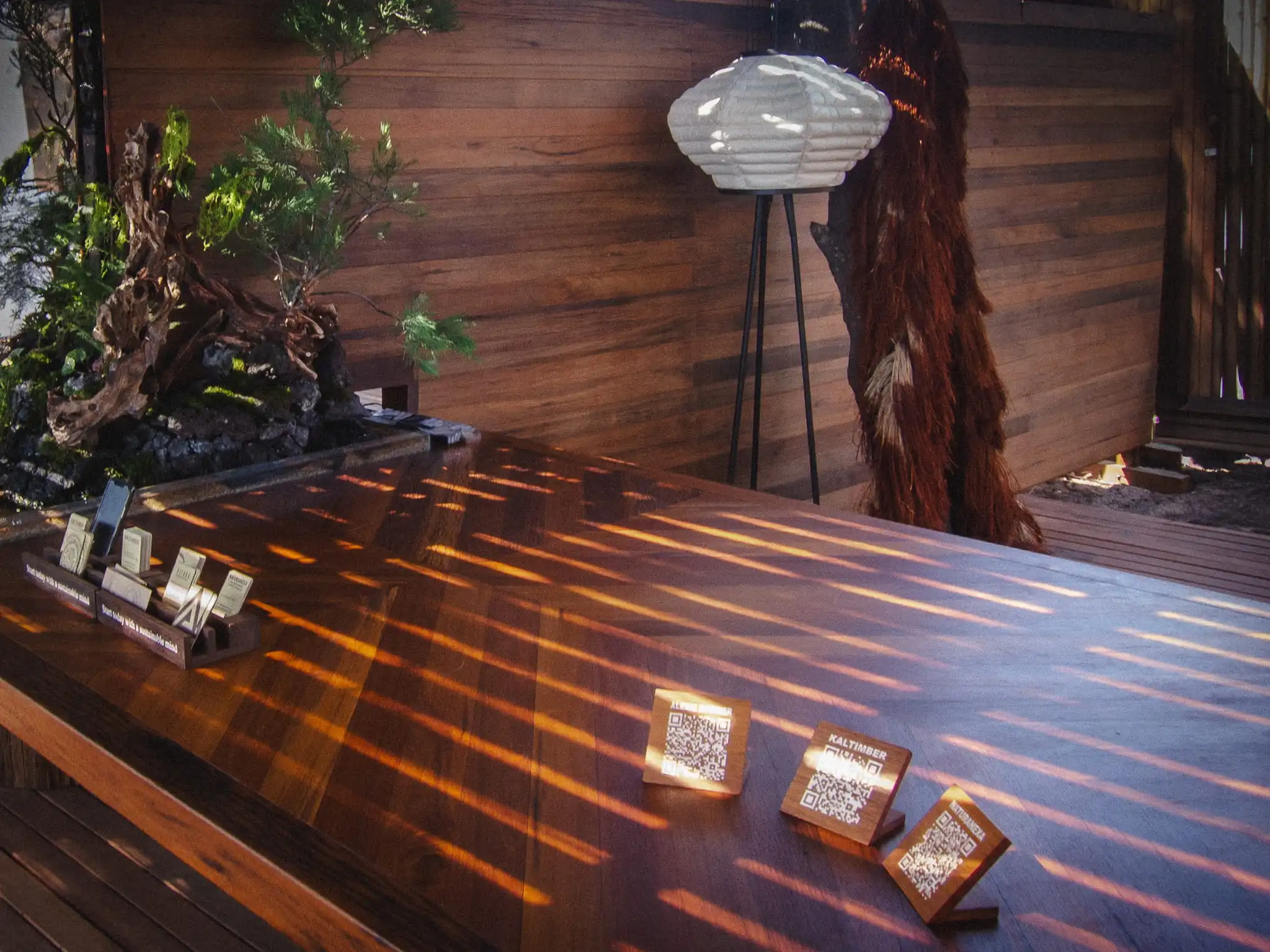
With more than 250 participating brands, picking favourites is a bit absurd. We tried anyway. There were a handful of spaces we kept wandering back to, and Second Growth, by Kaltimber and Alexis Dornier, was one of them.
Built around reclaimed timber and developed with collaborators including Exotiscape, Eco Mantra and Replant World, the installation was striking without shouting about itself. A planted water feature ran through the space, while the materials did most of the talking.
We later learned that Kaltimber had originally designed Second Growth for a different site at the event. Their allocated site had changed, meaning measurements had to be adjusted and pieces cut to make the installation work in its new home. You would never have known.
There’s something quite fitting about an installation celebrating second lives for materials having to adapt and find a second life of its own before the doors even opened.
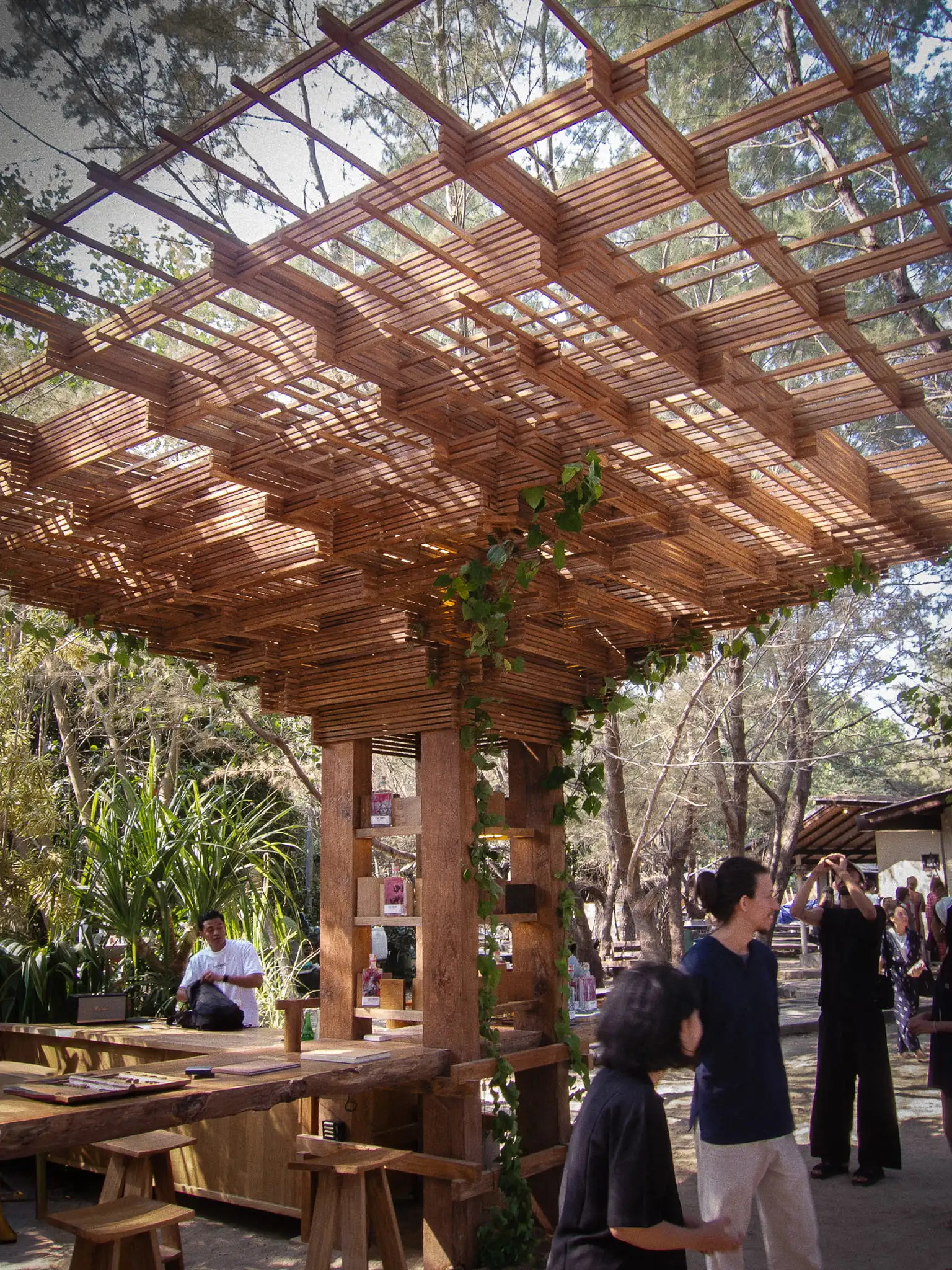
We also kept wandering back to Main Main, Blancostudio’s pavilion designed by architect Conchita Blanco and built with her husband, Avalon Carpenter of Kalpa Taru Bali, with Bali Landscape Company. When we told Avalon how stunning it was, he was quick to give Conchita all the credit.
Constructed from timber offcuts, the huge geometric canopy was absolutely stunning—intricate and sculptural, but somehow completely at home among the trees. Underneath, long communal tables were scattered with beautiful wooden chess and backgammon boards, objects and collaborations, and, importantly, people actually hanging out and playing. It was beautiful without being precious, and it was fun.
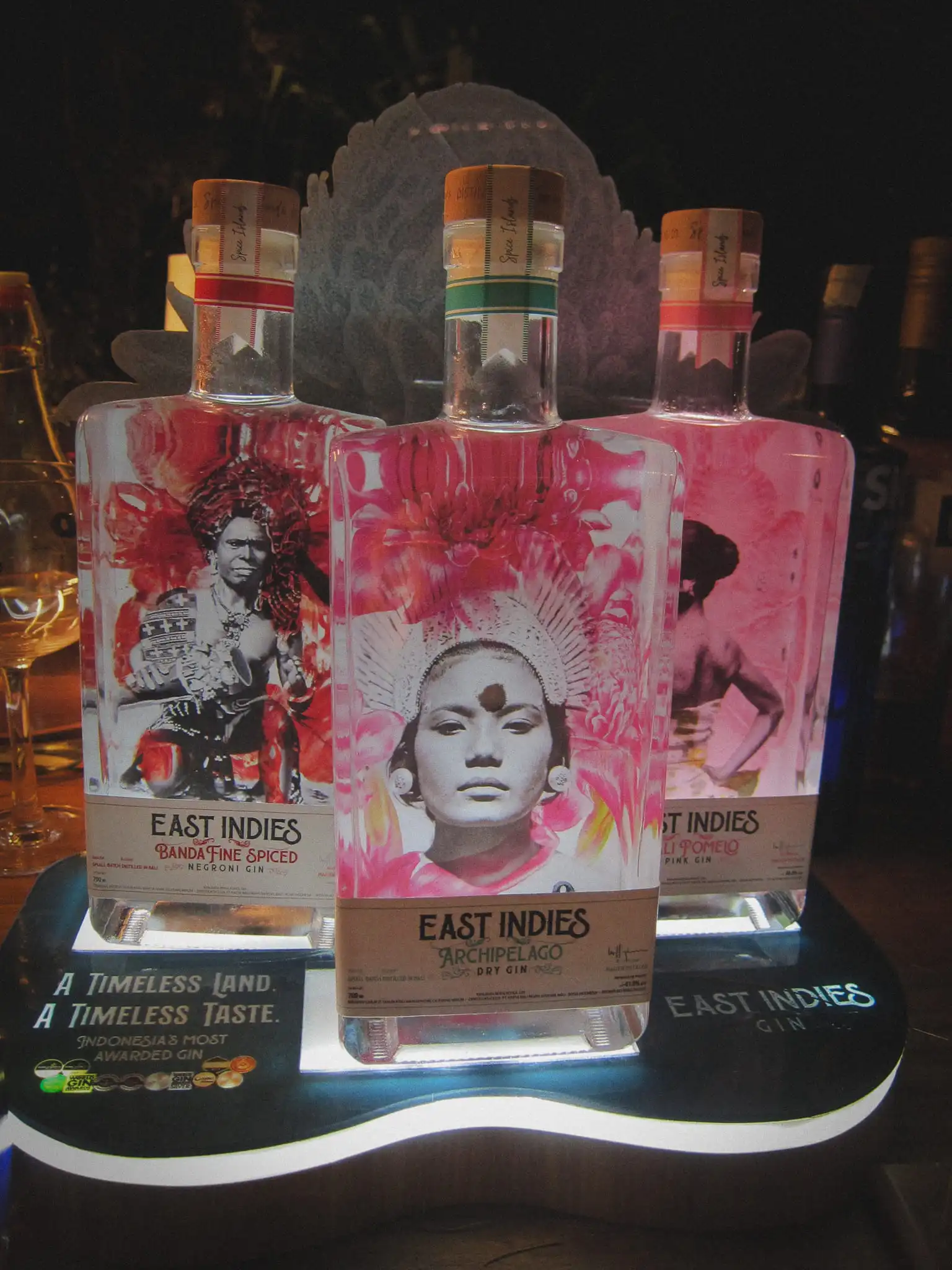
East Indies Gin had possibly some of the best-looking bottles at the event. We don’t drink, but apparently we can still admire gin packaging for an unreasonable amount of time.
Both Main Main and Second Growth ultimately appeared among the six exhibition booths shortlisted by Jia Curated, with Main Main taking the top prize. Very well deserved.
Five Days and Still Finding Things
One of our final discoveries came almost embarrassingly late.
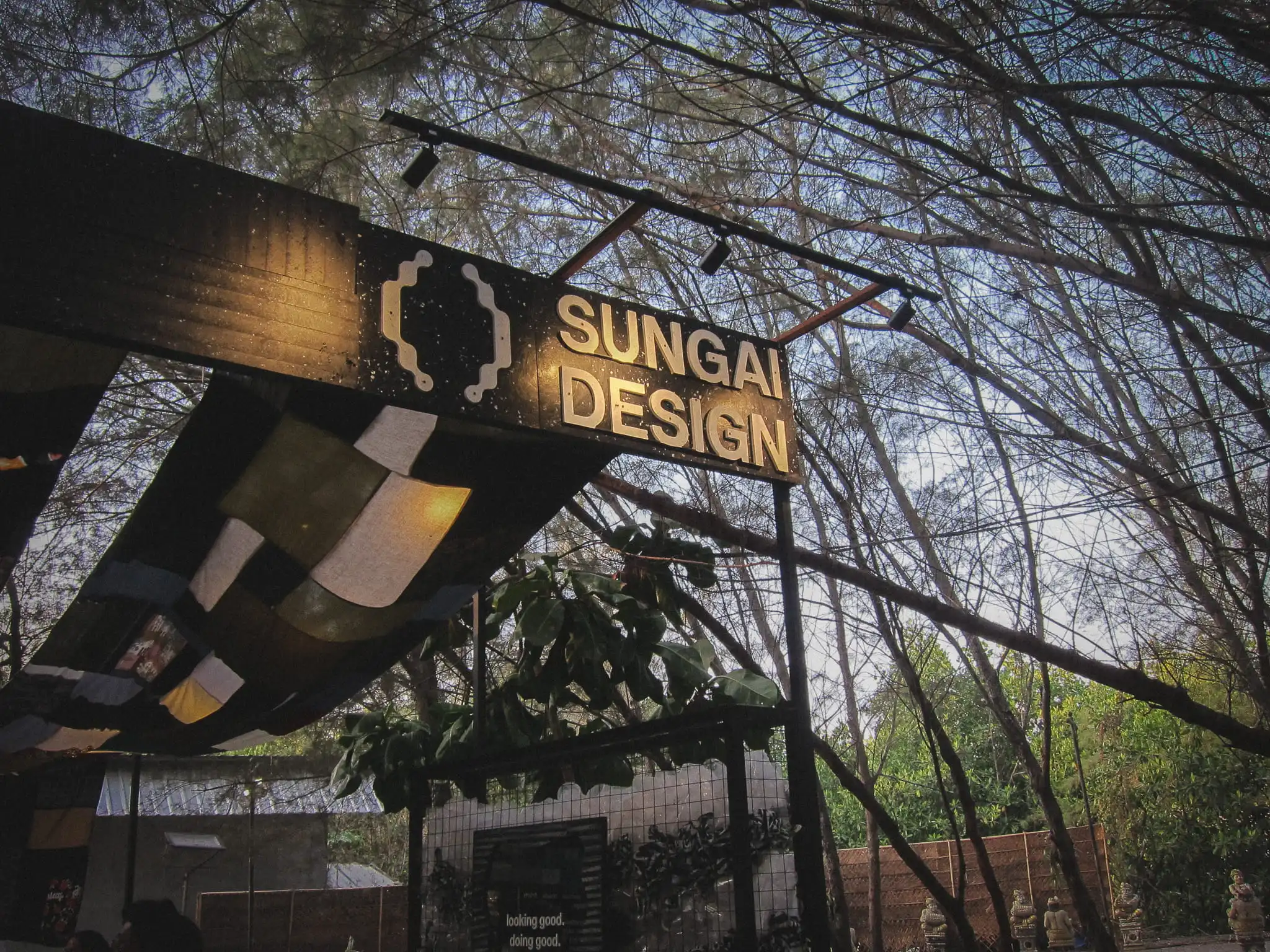
On the last day, shortly before leaving, we stumbled across Sungai Design. We’ve followed the project since its early Ombak Lounge Chair, made using plastic collected from Indonesia’s rivers, but the range has grown substantially since then. Stools, benches and a hospitality collection now sit alongside the original pieces, all connected to the river-cleaning work of Sungai Watch.
By that point we were too knackered to have a conversation with anyone—and the team was busy with visitors anyway—so we quietly admired the booth and carried on. Mad respect.
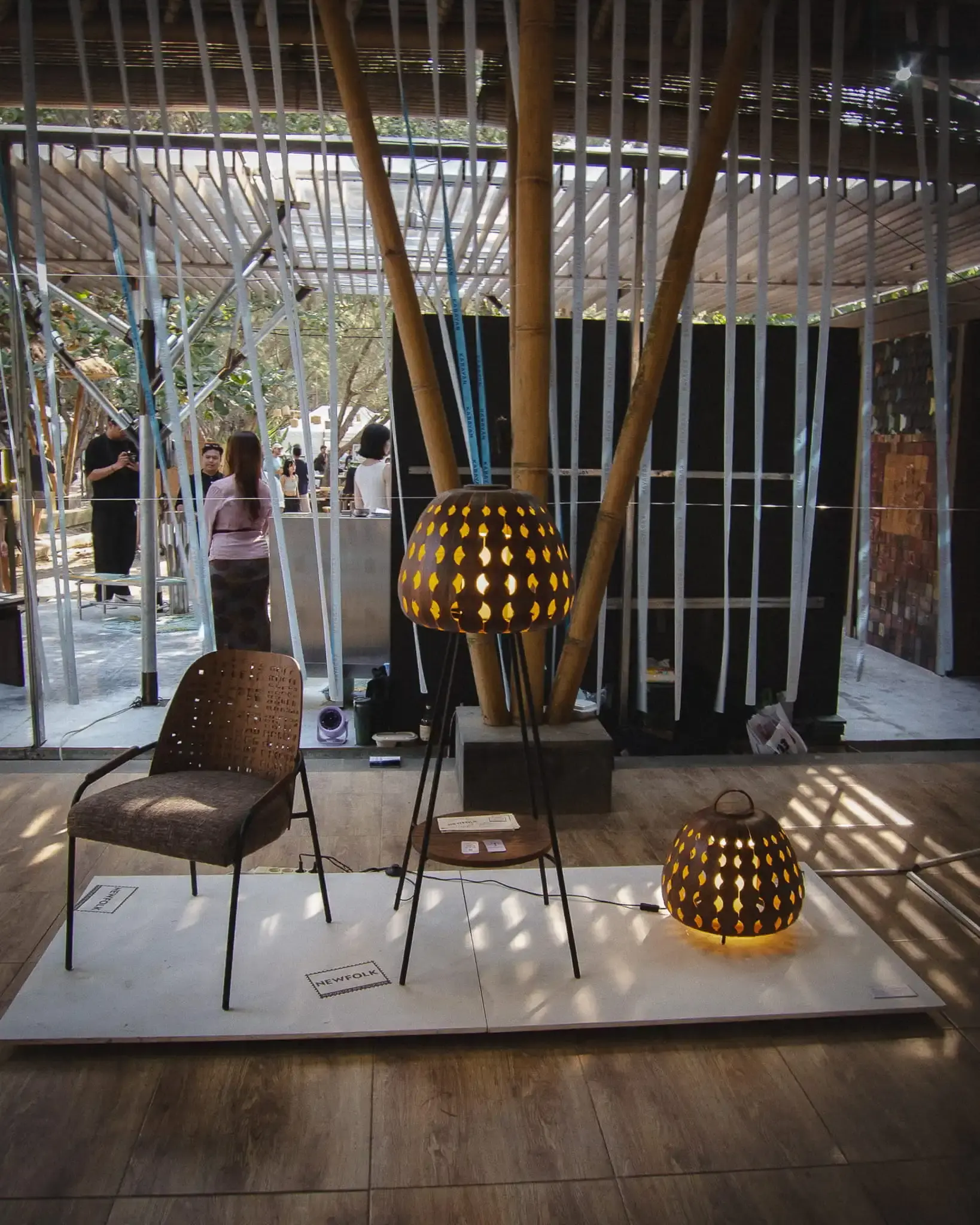
Elsewhere there was Heveya, Studio Dapur, Jelajah Rattan, Newfolk’s TOMORROW exhibition and far too many others to properly cover here. The Architecture in Scale exhibition alone deserves another story, including Elora Hardy’s beautiful Crystal Canoe.
And thankfully, between all that looking and talking and thinking, there was Acme Coffee, Rosalie Cheese, Huckleberry Friend and Room4Dessert keeping everyone extremely well caffeinated and fed. Also important.
We caught the tail end of a conversation between designer entrepreneurs Gabriel Tan and Jia Curated co-founder Budiman Ong, talking about the realities of building a design-led business, from manufacturing and international collaboration to the decidedly less glamorous business of actually making it all work. After five days at Jia, that felt particularly apt.
Because ultimately, as beautiful as everything looked, that may have been what made the event feel different. People talked. Designers explained things. Strangers sat together. Ideas bounced between architecture and landscape and craft and technology and publishing and food. The installations gave everyone somewhere to gather, rather than simply something to photograph.
Five days is a long time to spend at any event. Somehow, it still felt too short.
More from Jia Curated soon.
Des Res attended Jia Curated on an editorial basis. This coverage is not sponsored, commissioned or produced in partnership with Jia Curated or any of the brands, designers or exhibitors featured.