

Judgement Can’t Be Downloaded
By Des Res Bali | August 2026
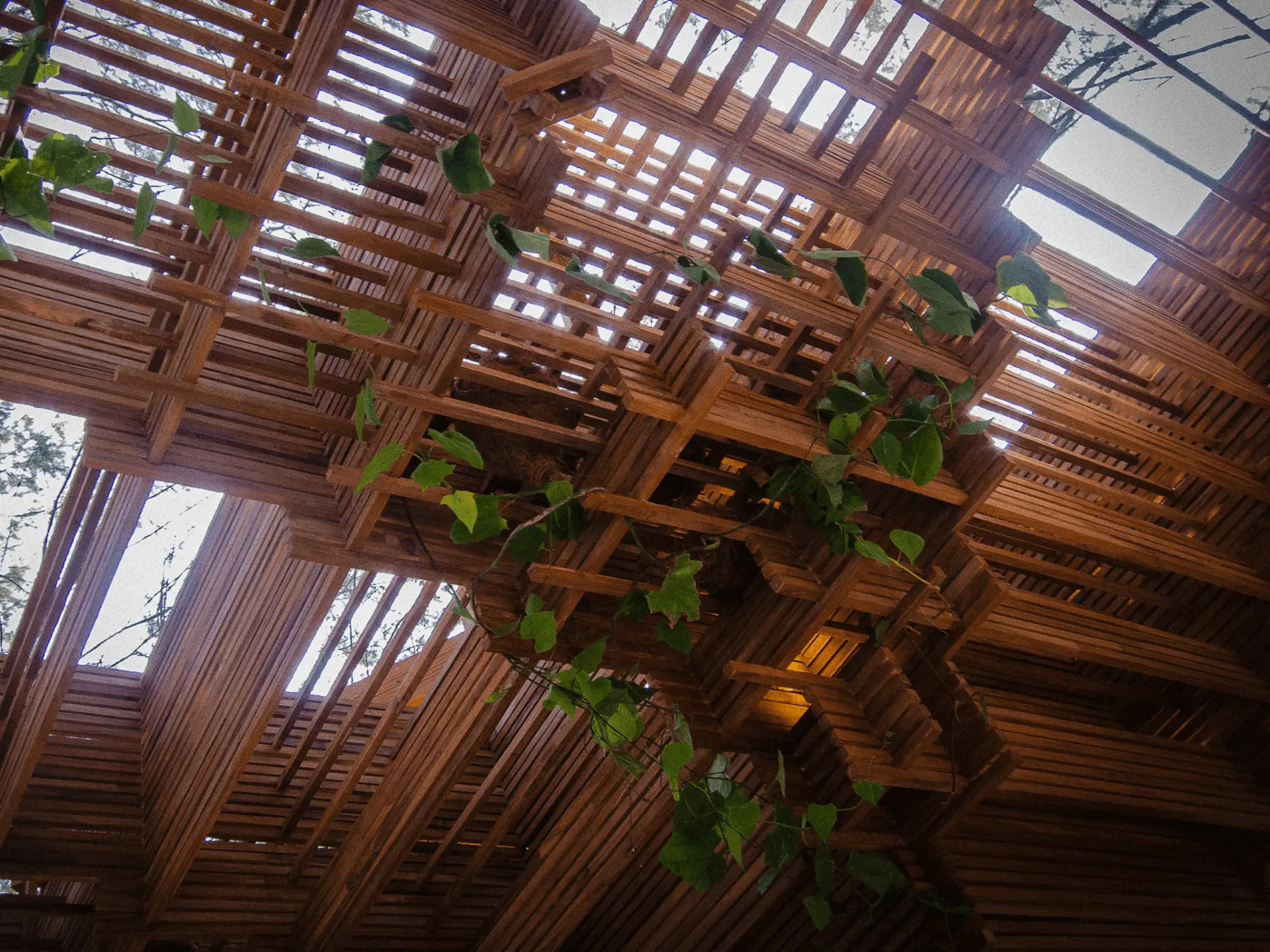
As development accelerates across Bali and technology puts endless answers at designers’ fingertips, onstage conversations with Peter Stutchbury, Fiona Lynch, Popo Danes and I Ketut Dirgantara point back to something more fundamental: landscape, intuition and the intelligence of what’s already there.
What if we’re making things more complicated than they need to be? More references. More technology. More access to information. More buildings. More ways of doing just about everything.
There’s a tendency, when faced with a problem, to assume the answer must be something new. A new idea. A new system. A new way of building, living, or working. And, right now, Bali offers plenty of evidence of where that instinct can lead.
The island doesn’t exactly have a shortage of new buildings, new developments, or new ideas about how we’re supposed to live. Spend any amount of time driving around right now and that much is obvious, particularly in certain gridlocked pockets like Uluwatu, Canggu, and Ubud.
But what if, occasionally, the better answer is already right in front of us?
That idea kept surfacing during five days at Jia Curated last month. Not in the form of some grand manifesto, and not always in the same way, either. But across conversations about architecture, landscape, technology, intuition, and the speed of change in Bali, it kept coming back to the same thing: pay attention.
Nothing New to Build
Architect Popo Danes — on a panel with I Ketut Dirgantara, moderated by Design Anthology‘s Raina Alonge — talked about the speed of development in Bali, when the conversation turned to Uluwatu. “It’s shocking to see what’s happening in Uluwatu in the last two years,” he said.
But rather than simply arguing for less development, Danes pointed elsewhere. Why not go back to places Bali has already built? He talked about Kuta, redesigning traffic and infrastructure, and refurbishing older buildings on valuable land. Basically, finding ways to breathe new life into areas that have already been developed rather than constantly moving on to the next part of the island.
Fiona Lynch noticed something similar in some of Bali’s older hotels. The Australian interior designer — who spoke with Design Anthology’s Jeremy Smart at the festival — had visited several during her time on the island, many built around 30 years ago, and was struck by how well they’d held up.
“The worst thing that could happen would be for them to be demolished,” she said.
Rather than demolishing them, Lynch talked about the potential to give these places another life by keeping what works, reconsidering what doesn’t, and adapting them for the way people live and travel now. Without erasing what made them good in the first place.
It’s not the most radical idea in the world, and maybe that’s the point. It doesn’t have to be radical. It just has to make sense.
Nature Is Your Biggest Teacher
For Australian architect Peter Stutchbury, paying attention starts even earlier. Before the building, before the materials, and before there’s much of an idea at all. It actually starts with the land.
During his talk with Design Anthology founder Suzy Annetta, Stutchbury told a story from his childhood on a large Australian farm. He was 11, left with two dogs and a motorbike to keep roughly a thousand sheep together while his older cousin returned to the homestead. After an hour, the flock started to split.
Rather than continuing to chase them, Stutchbury looked at the terrain around him. He realised that if he moved the sheep into a particular spot, natural features in the landscape could contain them on two sides, leaving him and the dogs to manage the rest.
“Landscape can provide you with answers if you look at it and if you try and understand it,” he said.
Stutchbury sees landscape as a source of knowledge, not simply a backdrop for architecture. He spoke about Indigenous communities historically looking to the land to understand where villages should sit, how people should farm and how they should build.
“Nature is your biggest teacher,” he said. “Nature nurtures you as a person.”
He put that idea to the test quite literally. Stutchbury and his partner once spent five years living in a tent on a spectacular coastal site in Sydney, where they’d eventually build their home. They cooked over an open fire and bathed in the garden.
He talked about that experience as one of the best periods of his life, essentially because, as he so beautifully put it, it “allowed me to understand how complex we’ve made things.” They put most of their belongings into storage and, years later, a good portion of those belongings are still there. They simply haven’t needed them.
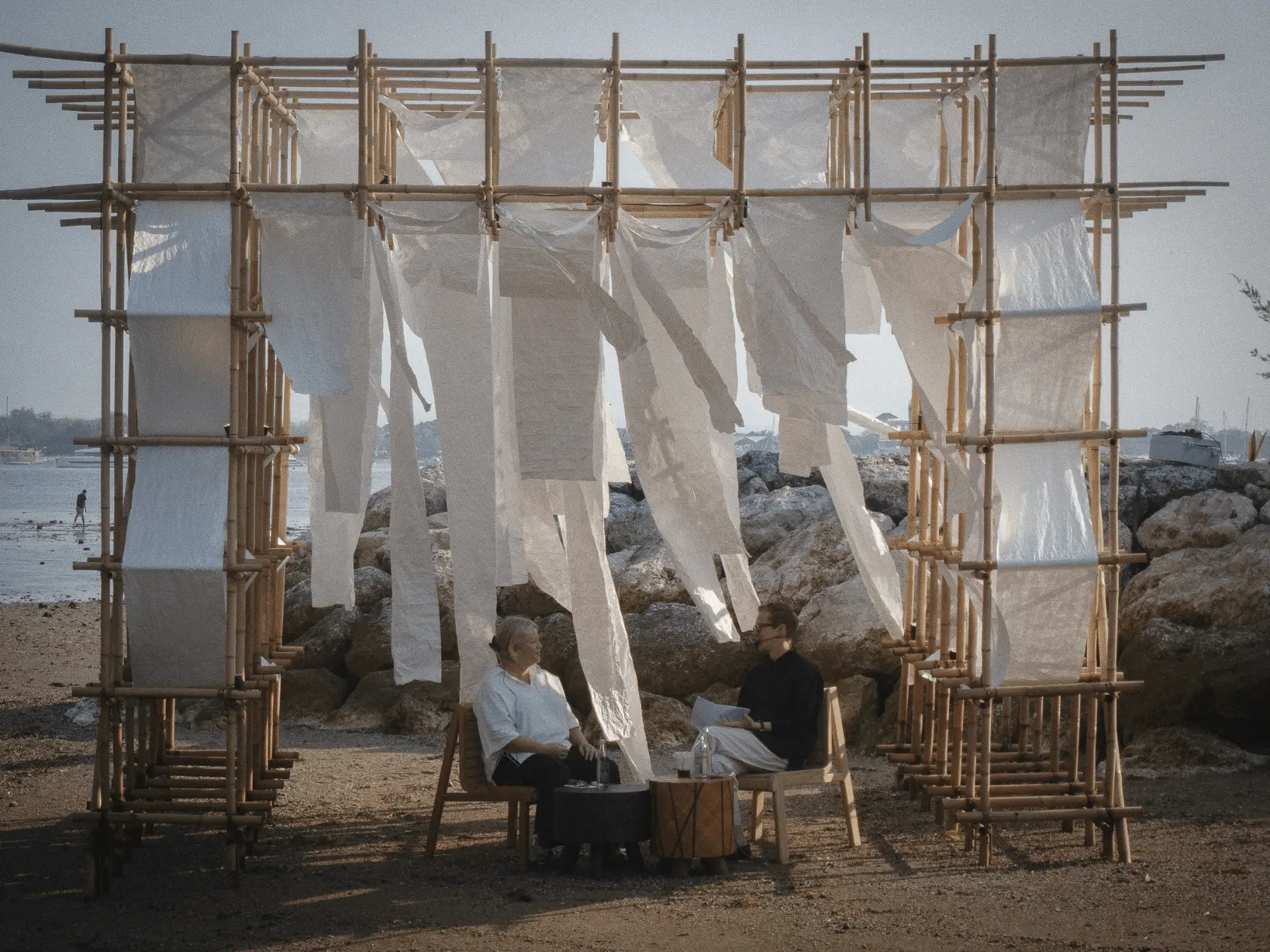
That same line of thinking surfaced again when Stutchbury talked about designing a home for the late Japanese fashion designer Issey Miyake.
He once asked Miyake why he’d chosen him for the project, and Miyake told him it was because Stutchbury would connect him with nature. Stutchbury pointed out that plenty of Japanese architects could do that, but Miyake meant something more specific. Others might connect him to nature through a pane of glass, but he wanted to be connected “spiritually to the place.”
It’s a pretty small distinction, but the implications are far from small. A building can photograph beautifully, get loads of saves on Instagram, and still tell you almost nothing about where it is in the world.
Not Over-Designing
Lynch arrives at a similar place but from a very different direction. When asked about the logic behind the way she puts materials, colours and spaces together, her answer was beautifully uncomplicated. “It’s pure intuition,” she said.
Her studio might start with a hundred materials before slowly whittling them down. People often describe her work as minimal, but Lynch sees it more as restraint — something that has developed through years of practice and an increasing awareness of “not over-designing.”
She also talked about convincing clients to keep existing elements simply because they were beautifully made. If the craftsmanship is good, why strip it out just so the next designer can put their own stamp on the project? There’s something refreshing about that absence of ego.
Starting over gives you a blank page. Working with what already exists asks different questions, like, what’s actually good here? What deserves to stay? What could be better? And what are we about to throw away simply because we can?
Anything is Coming
I Ketut Dirgantara, of Bali-based DDAP Architect, talked about the almost bottomless supply of references available to younger architects.
“When you open the internet, anything is coming,” he said. Pinterest, other architects, whatever aesthetic happens to be ricocheting around everyone’s feeds that month. Dirgantara pointed out that Bali itself has become a place where almost every architectural style can now be found.
Having access to all of it isn’t necessarily a bad thing. The challenge is learning how to navigate it, filter out the noise, and eventually work out a direction of your own.
Stutchbury sees a related problem in architectural education, particularly as AI becomes part of the way architects learn and work. He talked about being taught through drawing, light and shade, structure, and architectural history — disciplines he believes help “germinate a creative thinking and a creative response.”
“But these days you can really answer a lot of your problems with AI,” he said.
Lynch, meanwhile, is already using it. Her studio uses AI mostly for research, and she sees plenty of potential in taking some of the more labor-intensive work out of the rotation in her practice.
So the question isn’t really whether designers should use these tools. It’s how you develop your own judgement when the supply of references, ideas, and increasingly answers is virtually endless.
When Lynch was asked what younger designers should be developing, her advice had very little to do with technology: imagination, education, seeing things, getting outside your comfort zone, and building knowledge of your own.
Judgement, it turns out, is still something you have to develop for yourself — it can’t be downloaded.
When the Answer is No
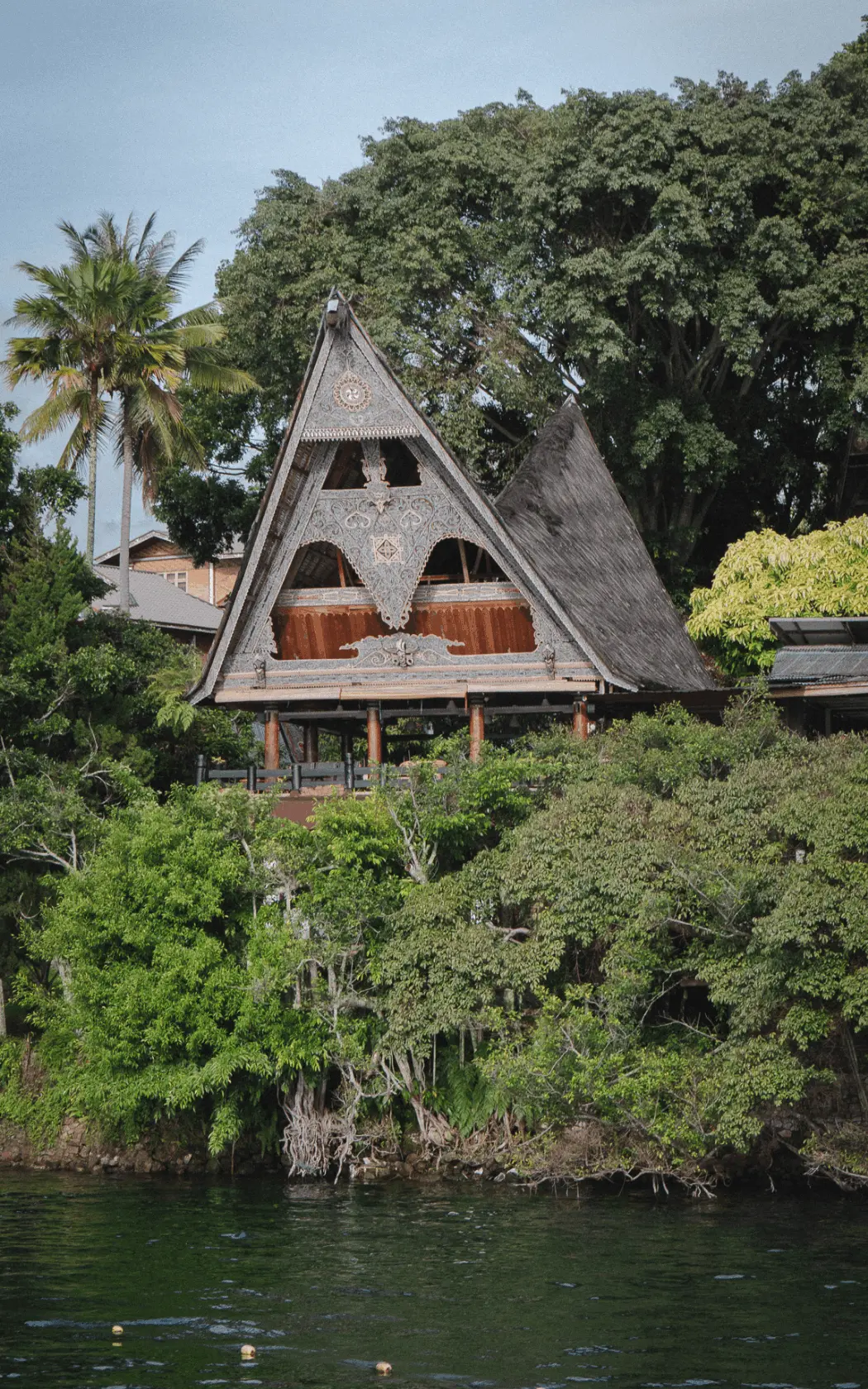
Sometimes judgement means deciding not to make anything at all. Dirgantara talked about assessing sites where the issue was that something simply didn’t feel right. Maybe it was the geology, maybe it was the actual land itself, or maybe it was just that what was being proposed didn’t belong there, plain and simple.
A client might technically be able to build, but that doesn’t mean Dirgantara wants to design it. There are times, he said, when nature simply says no.
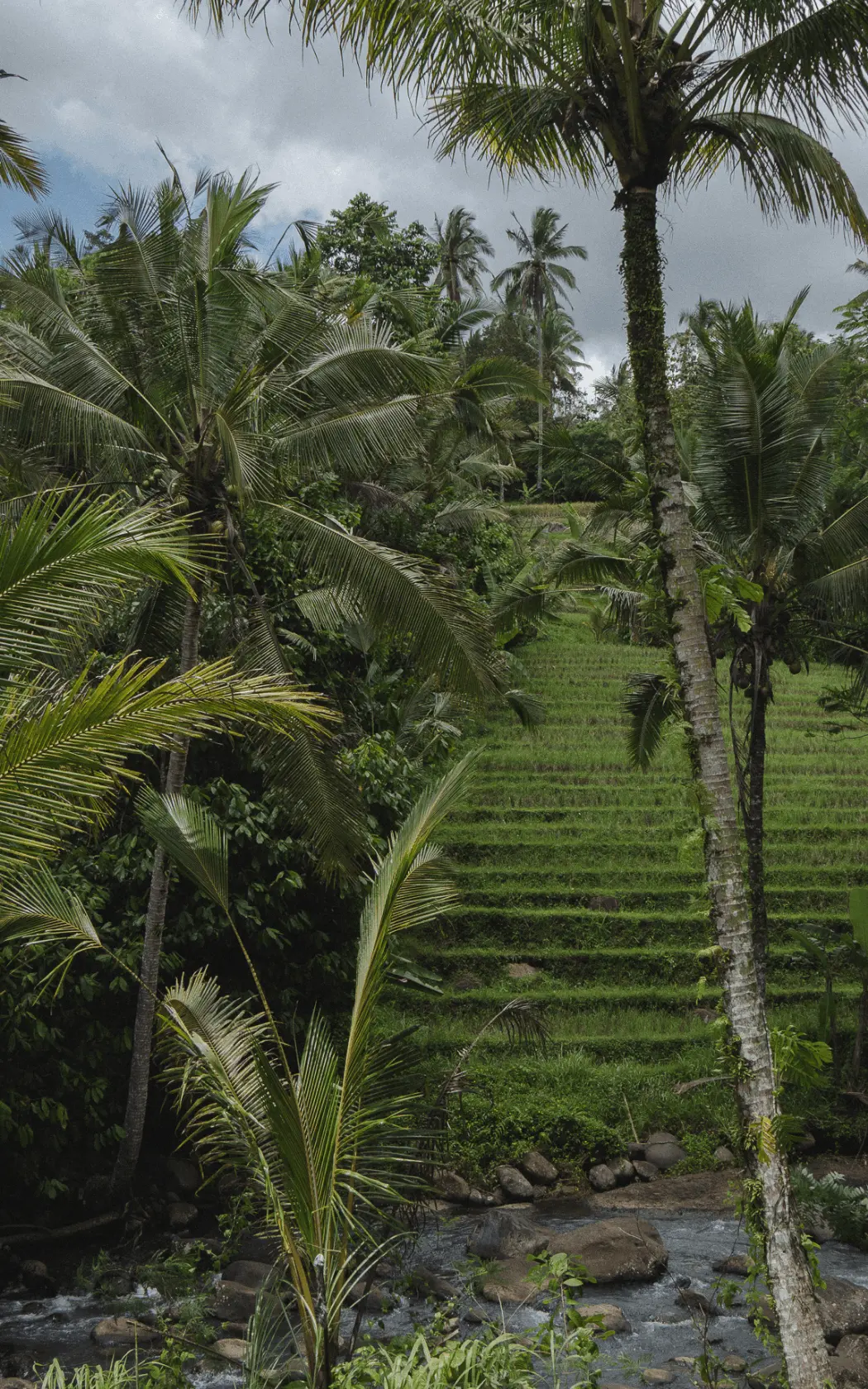
Danes told another story from that same conversation, from roughly 30 years ago, that landed on essentially the same conclusion. A foreign developer approached him about a project in the rice paddies. At first, Danes was looking forward to the project, but when he arrived on site one morning and saw the soft light falling across the fields, he changed his mind. “No, I cannot put a concrete on this kind of beautiful site,” he remembered thinking. So he didn’t.
That instinct didn’t appear out of nowhere. Danes also talked about Bali’s agricultural knowledge which includes calendars that track full moons, dark moons and tides, and the accumulation of generations living closely with natural systems.
He pointed to Bali’s traditional irrigation system, subak. And while the technology itself might be fairly simple, the intelligence lies in understanding gravity, water and how to distribute it through the landscape.
Innovation doesn’t always have to mean inventing something that wasn’t there before. Sometimes it can just mean knowing how to read what’s already in front of you. Maybe that’s the landscape. Maybe that’s an old hotel. Maybe it’s a beautiful detail that someone else put there already, or knowledge that was passed down through generations, or simply your own intuition.
None of this is to say technology is evil, or that nothing new should ever be built. Bali is changing. So is architecture, and so are the tools that make it.
But progress doesn’t always have to start with us asking what else we can make. Sometimes good design starts with knowing what to make, and sometimes it starts with knowing what to keep. And sometimes, it starts with looking closely enough to know when the answer is nothing at all.