Why Some Bali Villas Stay Calm (Even When Everything Around Them Isn’t)
By Des Res Bali
Editors Note:
We spend a lot of time moving through spaces across Bali — some quiet, some… not so much. This is less about technical soundproofing and more about how places actually feel to be in. As always, take it as perspective, not instruction — and sense-check anything important with people who build for a living.
Bali isn’t always quiet.
There’s traffic where there wasn’t traffic. Roosters that don’t respect time zones. Construction that appears overnight and disappears just as slowly.
And yet, every now and then, you walk into a villa that somehow feels removed from all of it.
Not silent. Just…settled.
Like the outside world has been gently turned down.
It’s Not About Blocking Noise Completely
No villa in Bali is perfectly soundproof.
That’s not really the goal.
The villas that feel calm don’t fight the environment — they soften it. They absorb, deflect, and diffuse what’s happening outside instead of trying to shut it out entirely.
One of the biggest differences is how spaces are arranged.
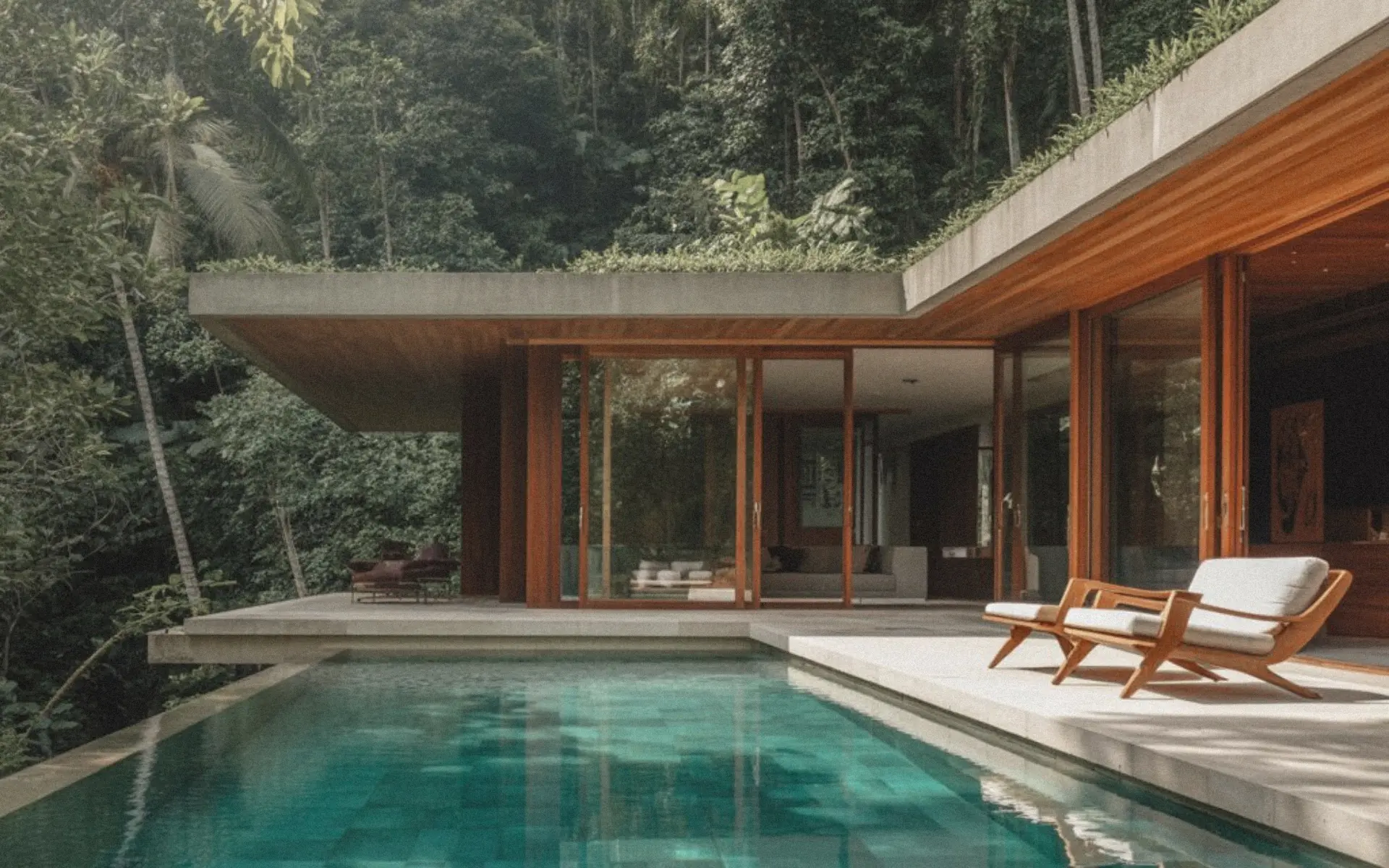
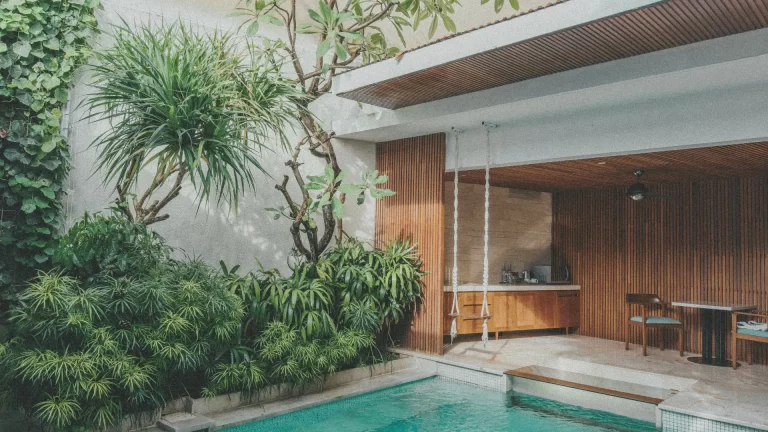
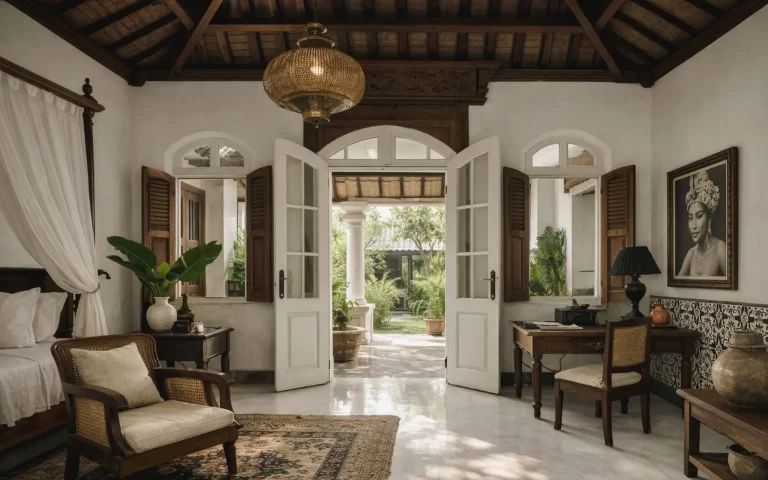
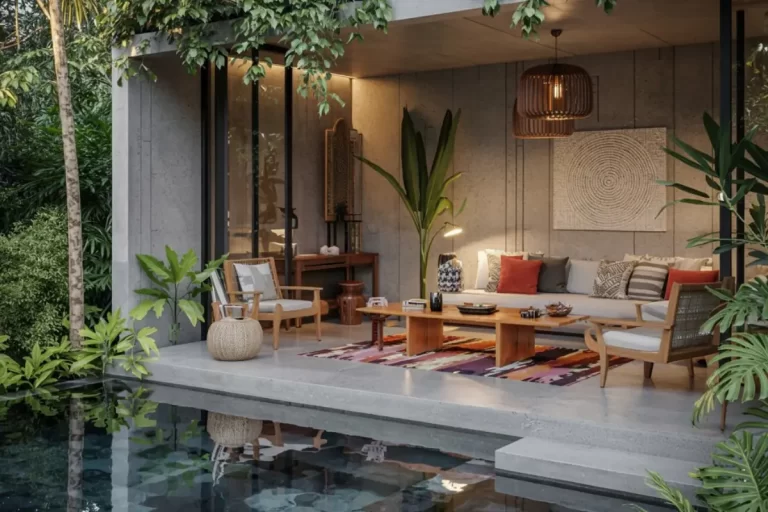
Bedrooms set further back from the road. Living areas oriented inward toward a garden or courtyard. Pools acting as a buffer between outside noise and the main structure.
It looks great. It photographs well. It opens everything up.
It also lets everything in.
The calmer spaces tend to balance that openness with something more solid — textured walls, layered materials, even built-in shelving or screens that break up sound without closing the space off.
It’s not about being enclosed.
It’s about having somewhere for sound to go.
Materials That Soften, Not Echo
Some villas feel loud even when they’re empty.
Hard surfaces everywhere — polished concrete, glass, stone — can bounce sound around in a way that makes everything feel sharper.
The ones that feel calmer usually bring in a bit of softness:
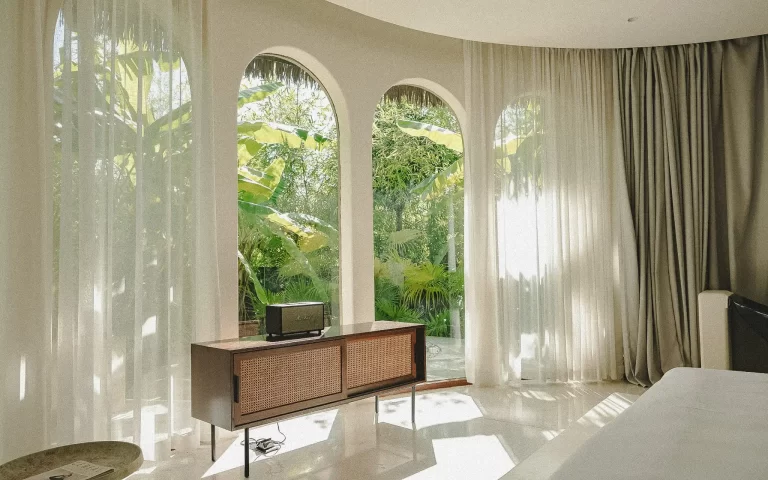
wood that absorbs instead of reflects textiles that take the edge off layers that stop sound from traveling too cleanly
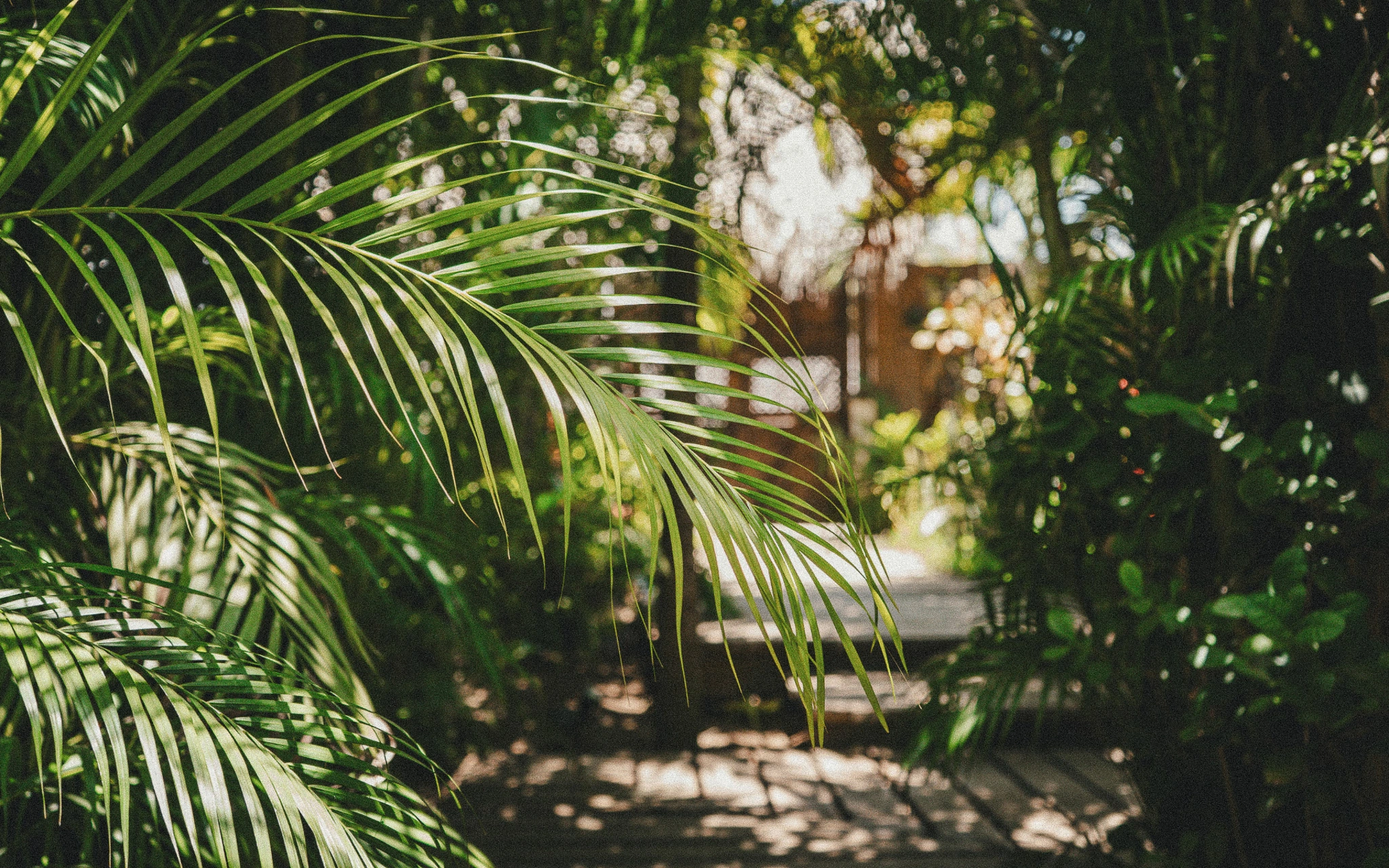
Dense planting, trees, and even water features can help break up sound before it reaches the living space. A well-placed garden can take the edge off a nearby road without you ever thinking about it.
It’s not silence.
It’s filtration.
The Villas That Get It Right
The calmest villas in Bali aren’t necessarily the most remote.
They’re the ones that have been thought through.
Where layout, materials, and landscape work together to create a bit of separation — not from Bali itself, but from the intensity of it.
You still feel where you are.
Just without the overwhelm.
FAQS: SOUND, SPACE, & COMFORT IN BALI VILLAS
Why do some Bali villas feel quieter than others?
Usually a mix of layout, materials, and landscaping. It’s less about insulation and more about how sound is managed across the space.
Can villas in Bali be fully soundproof?
Rarely. Most are designed to be open to the environment, so the goal is reducing and softening noise rather than eliminating it.
Do materials really affect how a villa feels acoustically?
Yes — hard surfaces reflect sound, while wood, fabric, and layered finishes tend to absorb it and make spaces feel calmer.
Is location still important?
Of course. But good design can make a noticeable difference even in busier areas.