Cheap, local and nearly a hundred years old, the perforated block still solves problems that plenty of newer materials don’t.
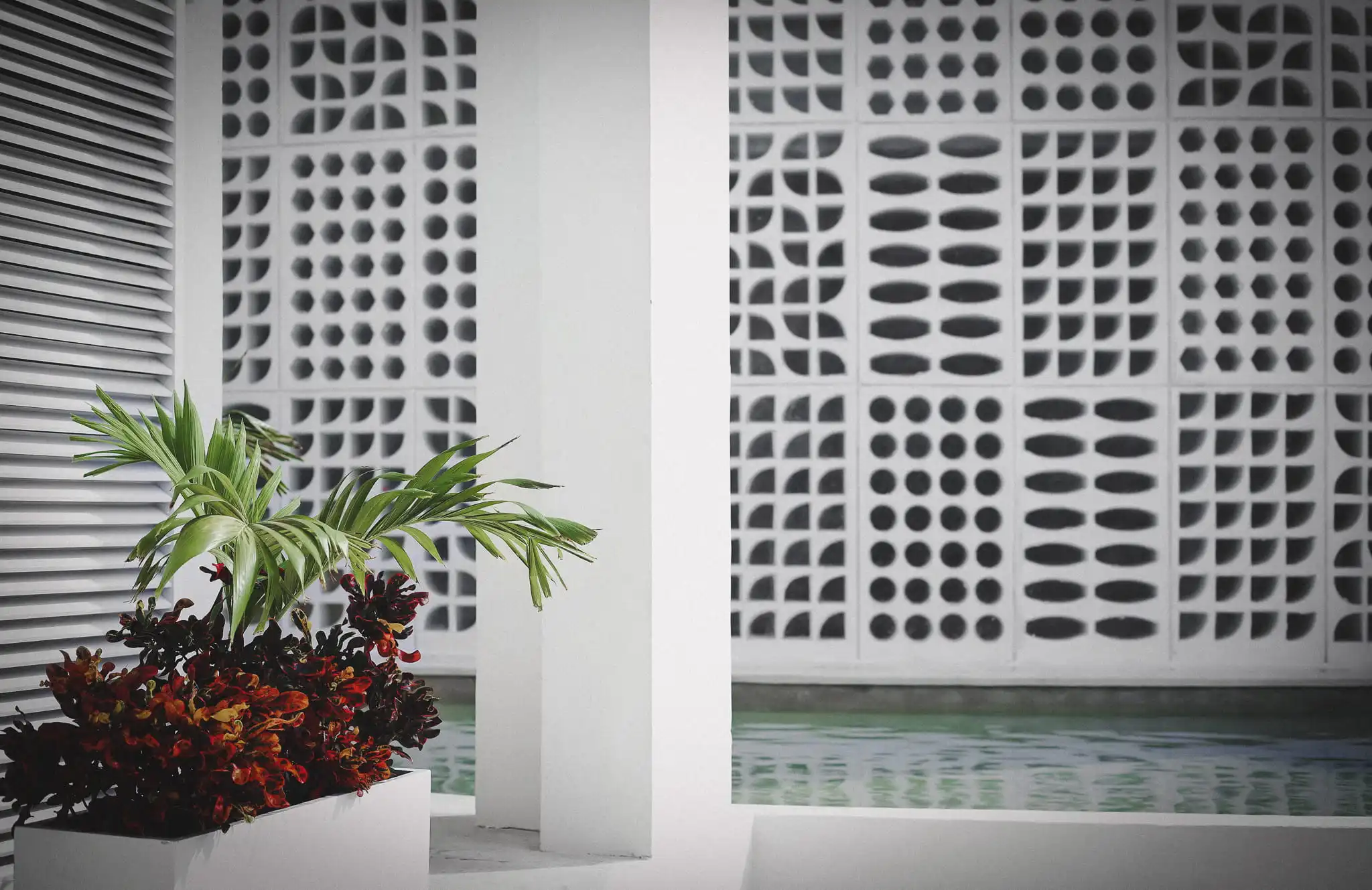
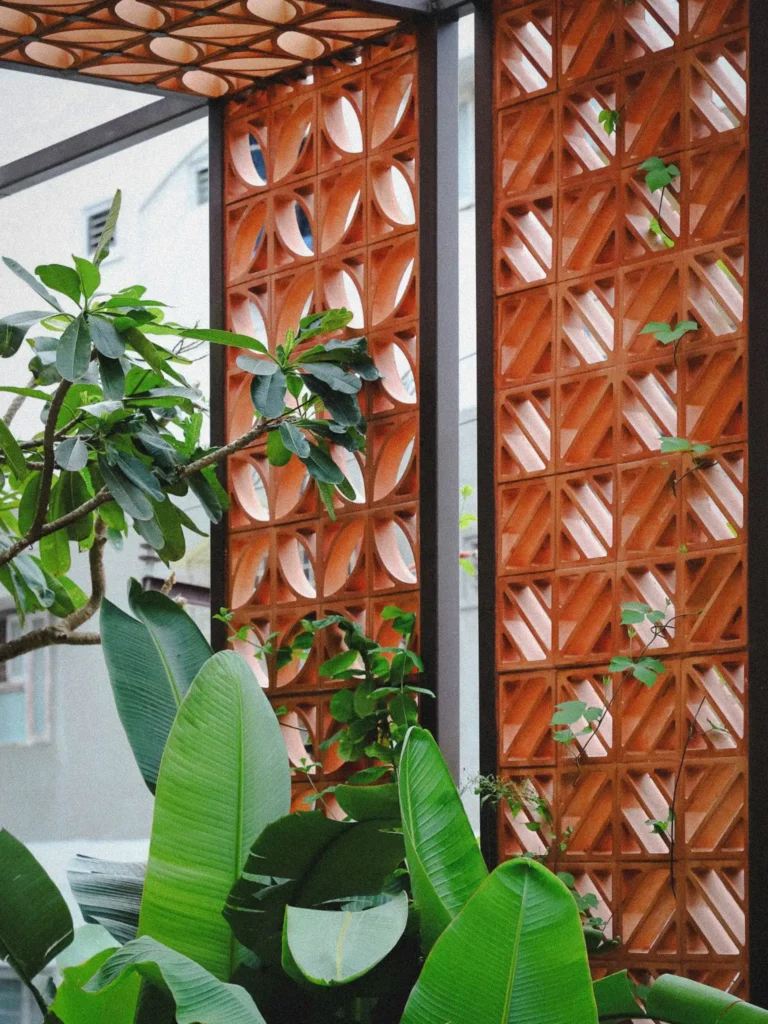
A breeze block (the decorative, perforated kind, not the plain building block familiar to British readers) is about as humble as building materials get. It’s a square of cast concrete or fired clay with holes in it. Stack enough of them and a plain wall becomes a pattern of light and shadow that moves through the day.
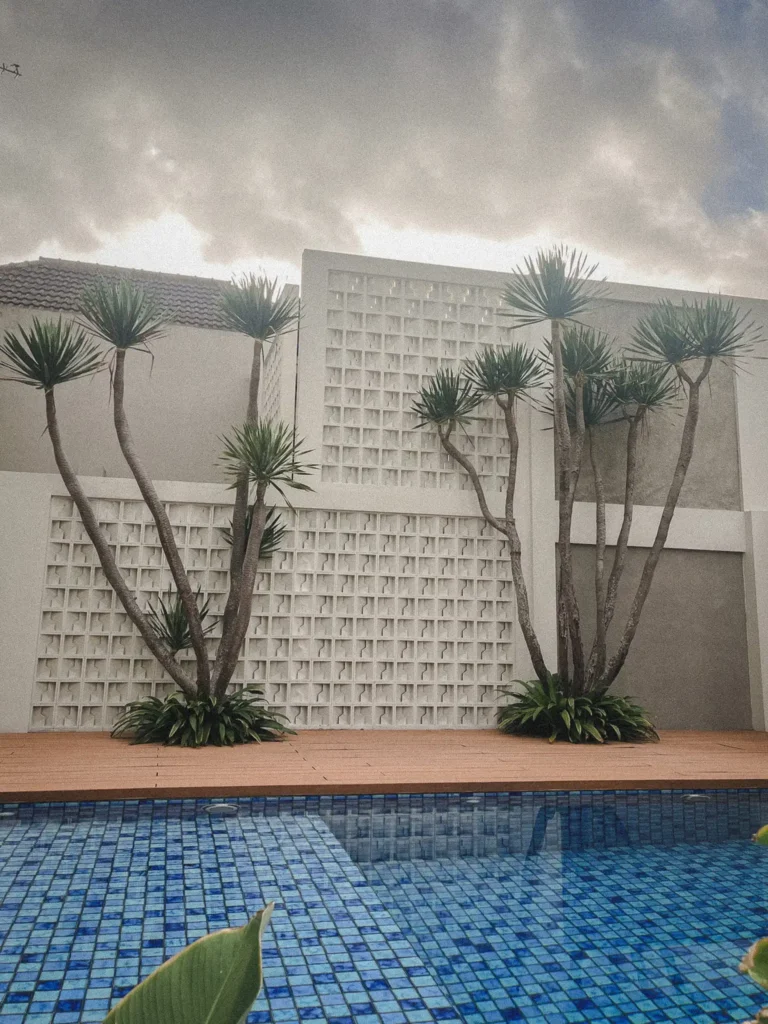
In Indonesia they’re called roster (or loster), and once you start looking you see them everywhere: fence walls, stairwells, the strip at the top of a kitchen wall where the heat needs somewhere to go. A standard 20 x 20 cm concrete block costs around Rp 10,000 to 13,000. For a material that does this much, that’s hard to beat.
What it actually does
The point of a breeze block is that a wall doesn’t have to be solid. A screen of them lets air through, softens direct sun and stops people seeing straight in, all at once. In a tropical house or a hotel, where so much of life happens between inside and out, that’s a lot of work for one wall to do.
Pattern and depth matter. Deeper blocks and angled openings keep out more sun and rain. Shallower, more open patterns let more breeze through.
There are weak spots, though. Driving rain gets in, and so does dust. Moving air doesn’t fix humidity on its own either, so a breeze block wall works as part of a proper ventilation plan, not as a substitute for one.
Where the name comes from
The best-known ancestor is the Brazilian cobogó, patented in Recife in 1929. Its name is made from the first syllables of its three inventors’ surnames: Coimbra, Boeckmann and Góis. Brazil’s modernists took it up as a way to deal with heat and glare, and it became one of the signatures of tropical modernism.
The idea itself is much older. Hot climates have used perforated screens for centuries, from the wooden lattice screens Portugal inherited from Moorish architecture to the carved stone jali of South Asia. What the cobogó added was a cheap, standard block that anyone could build a wall from.
Photo: Sharath G
Photo: Sodha Creative
Why it’s worth another look
Nothing about a breeze block needs reinventing. It’s low-tech and locally made, you can replace a broken one without touching the rest of the wall, and it works with the climate instead of against it. That’s exactly what architects in the tropics are now talking about when it comes to energy and cooling.
It’s a nearly century-old answer to a question tropical architecture is still asking: how do you keep a building cool without shutting it off? At around ten thousand rupiah a block, it’s still a pretty good answer.
Editorial note: This article is independently produced for informational purposes only. It is not sponsored, and no products, brands or businesses mentioned have paid for or contributed to its publication. Links are provided for reference only.