Bali Isn't Going Back to "How It Was." Let's Take Better Care of What’s Next.
By Des Res Bali
Photo: Des Res Bali
Everyone seems to have their own version of old Bali. For some, it’s Canggu before the shortcut. For others, it’s Ubud before the traffic, or Uluwatu before there was much of anything between one dusty turn-off and the next. Go back far enough and someone will remember when a road was still dirt, when a now-crowded stretch of coast had little more than a few warungs, or when the rice fields really did seem to go on forever. Stay here long enough and eventually you get your own version. The trouble is, none of them are coming back.
Bali has been changing for a lot longer than most of us have been around to complain about it. And while the pace of that change has become impossible to ignore in parts of the island, nostalgia isn’t much of a plan for what happens next. The question now is what we do with the Bali that’s actually here. Because change itself isn’t the failure, but carelessness can be.
Photo: Des Res Bali
There will be more buildings. There will be new hotels, restaurants and homes. People will continue to come here, and money will continue to be made here. None of that is inherently at odds with taking care of the place. We can get a little smarter about where — and how — we do it.
For years, development in Bali has had a habit of following whichever part of the island is having its moment. Seminyak gave way to Canggu, Canggu pushed north, and now the Bukit is the next frontier. Rice fields become construction sites, quiet roads get busier, infrastructure catches up when it can, and eventually everyone starts looking for somewhere else that still feels undiscovered and a little wild. Then we do it again.
But there’s another possibility: look again at what’s already here.
Photo: Des Res Bali
Speaking at Jia Curated earlier this year, architect Popo Danes talked about the potential of looking again at places like Kuta. Once the centre of Bali tourism, Kuta has spent years being passed over while everyone went looking for the next cooler part of the island. But the buildings, roads and infrastructure didn’t disappear when attention moved elsewhere, so why do we keep starting from scratch?
This isn’t particularly radical. Cities have been reinventing supposedly finished neighbourhoods forever. Brooklyn has had more than a few lives. So have neighbourhoods across London, Lisbon, Los Angeles and San Francisco. Los Feliz isn’t the Los Feliz of a few decades ago, and neither is San Francisco’s Mission District (although you can still get a damn good burrito for peanuts if you know where to go). Some places get richer, some cooler, some more crowded, some lose the thing everyone liked about them in the first place. Then, occasionally, somebody looks at a part of town everyone else has written off and sees something worth paying attention to again. Why should Bali be any different?
The same can happen at the scale of a single building. An older structure doesn’t automatically need to come down because the land beneath it has suddenly become valuable. A hotel that’s fallen out of fashion isn’t necessarily finished. A house can be adapted, materials can be recovered, and a place can be reconsidered instead of outright replaced.
Photo: Des Res Bali
And yes, sometimes building new will make sense. Bali isn’t a museum, and treating it like one would be its own strange form of preservation fantasy, but new doesn’t have to mean more of everything, everywhere.
There are still parts of this island with a ton of breathing room. The pressures felt in Uluwatu, Canggu or central Ubud aren’t the pressures felt everywhere, and development isn’t inherently the problem. But there’s a difference between building somewhere and cramming more into places already struggling to absorb what’s there. And it’s worth remembering what the land was doing before somebody decided to build on it.
Photo: Des Res Bali
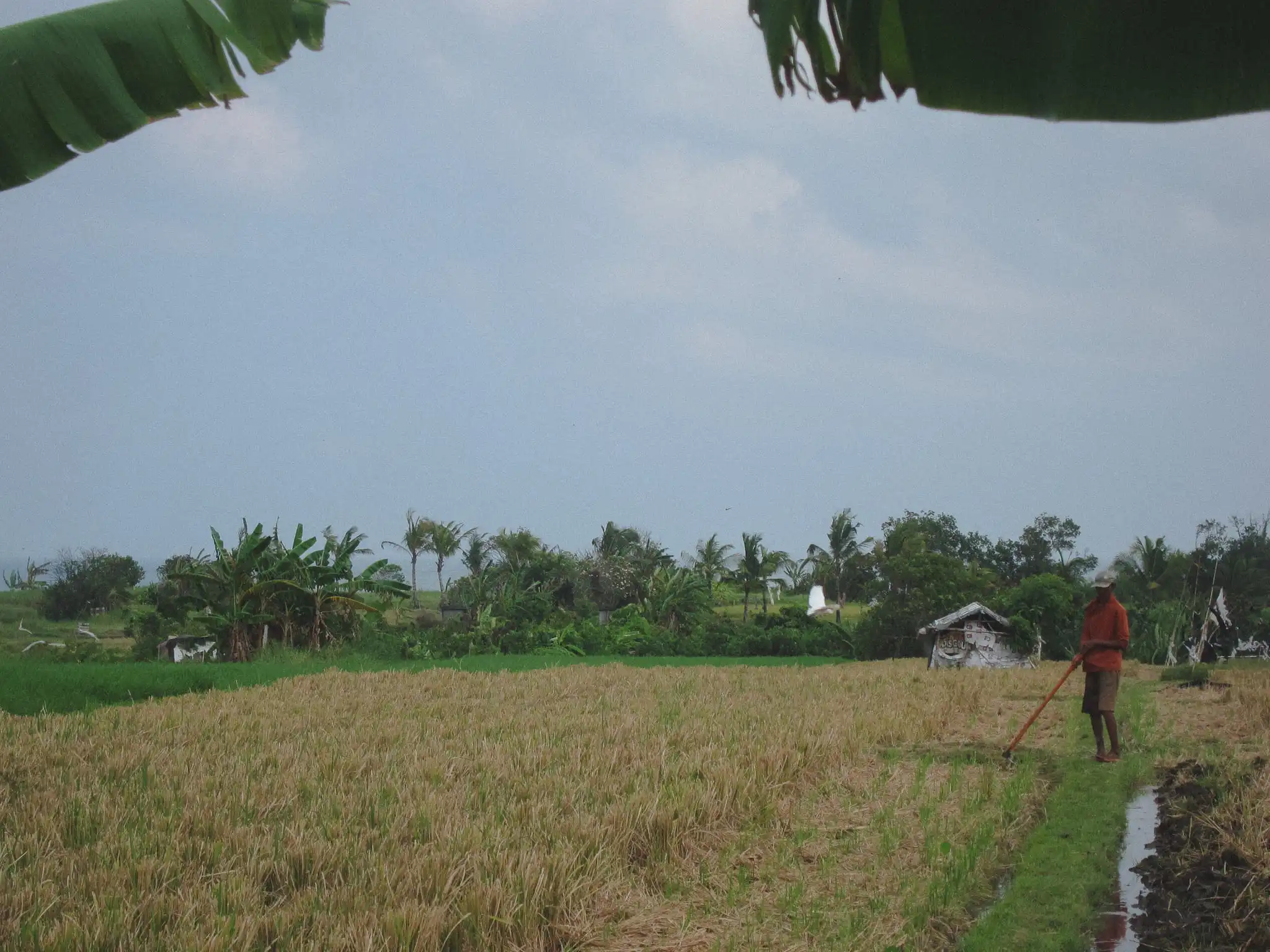
A rice field isn’t empty space. Neither is a grove of mature trees. And a coastline isn’t just an undeveloped opportunity waiting for somebody to work out the return per square metre. These places were already doing something before the real-estate listing came along. That idea is hardly new to Bali.
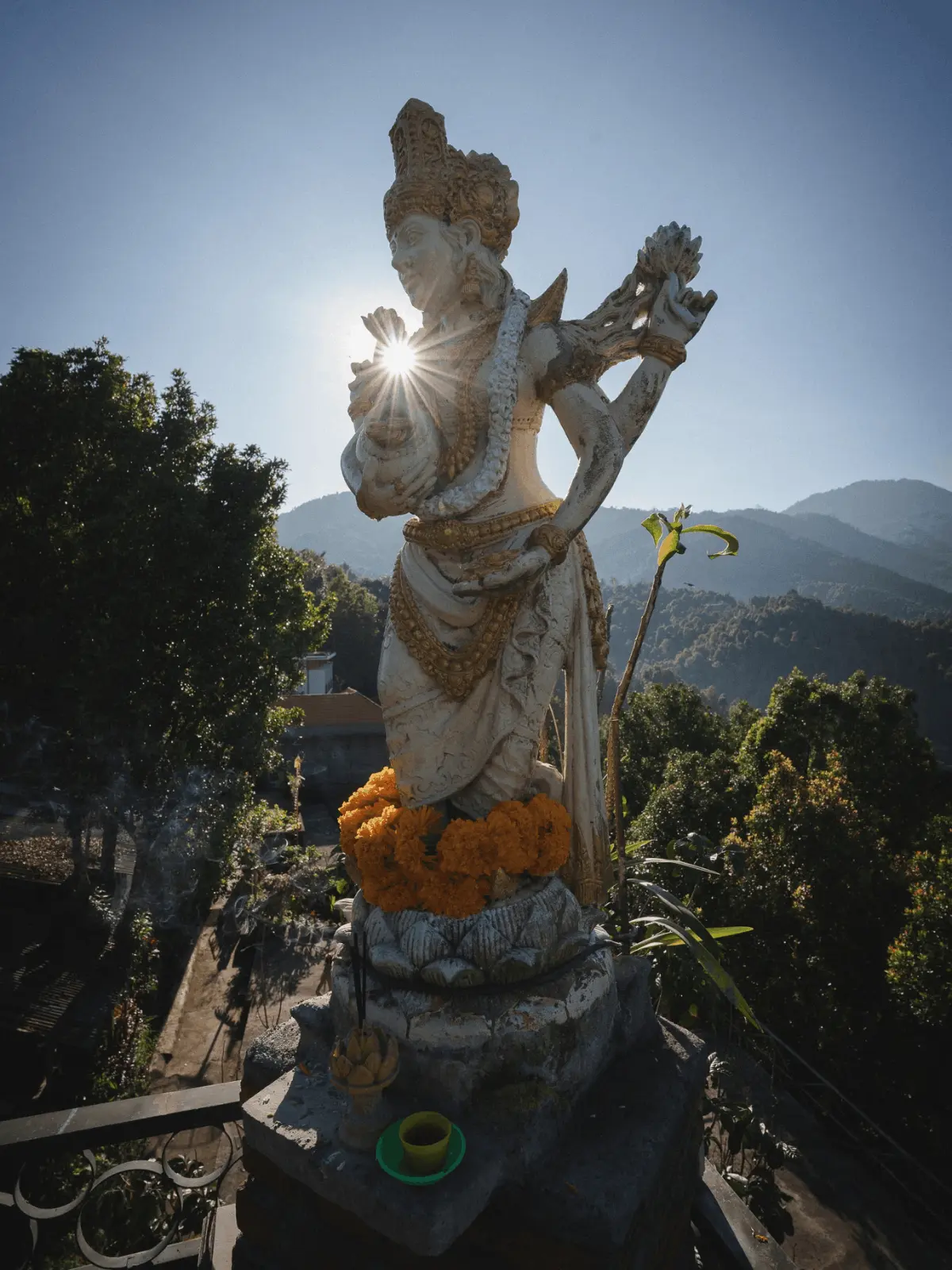
Tri Hita Karana, the Balinese philosophy centred on harmony between people, nature and the spiritual, predates the contemporary language of sustainability and regenerative design by a pretty long time. It doesn’t need to be borrowed as a branding exercise to make the underlying point useful: what we build exists in relationship with everything around it. And there are plenty of signs that people working here already understand that.
Photo: Des Res Bali
Across the first hundred stories on Des Res, we’ve encountered architects thinking about what can be retained rather than cleared; designers working with reclaimed materials; spaces shaped around trees and climate instead of fighting them; and people willing to look again at things that have been overlooked. None of it will turn Bali back into whatever year each of us privately decided was the good one. That probably isn’t the goal.
The island will keep changing. So will the people who live here, the people who visit, and the things we ask of it. We can build when building makes sense, reuse what still has life in it, and occasionally resist the urge to squeeze something else into a place simply because we can.
Maybe leaving somewhere better than we found it doesn’t mean leaving it unchanged. Maybe it just means remembering that, eventually, we leave. The place stays.