Jelajah Rattan: Rethinking an Indonesian Craft Material
By Des Res Bali
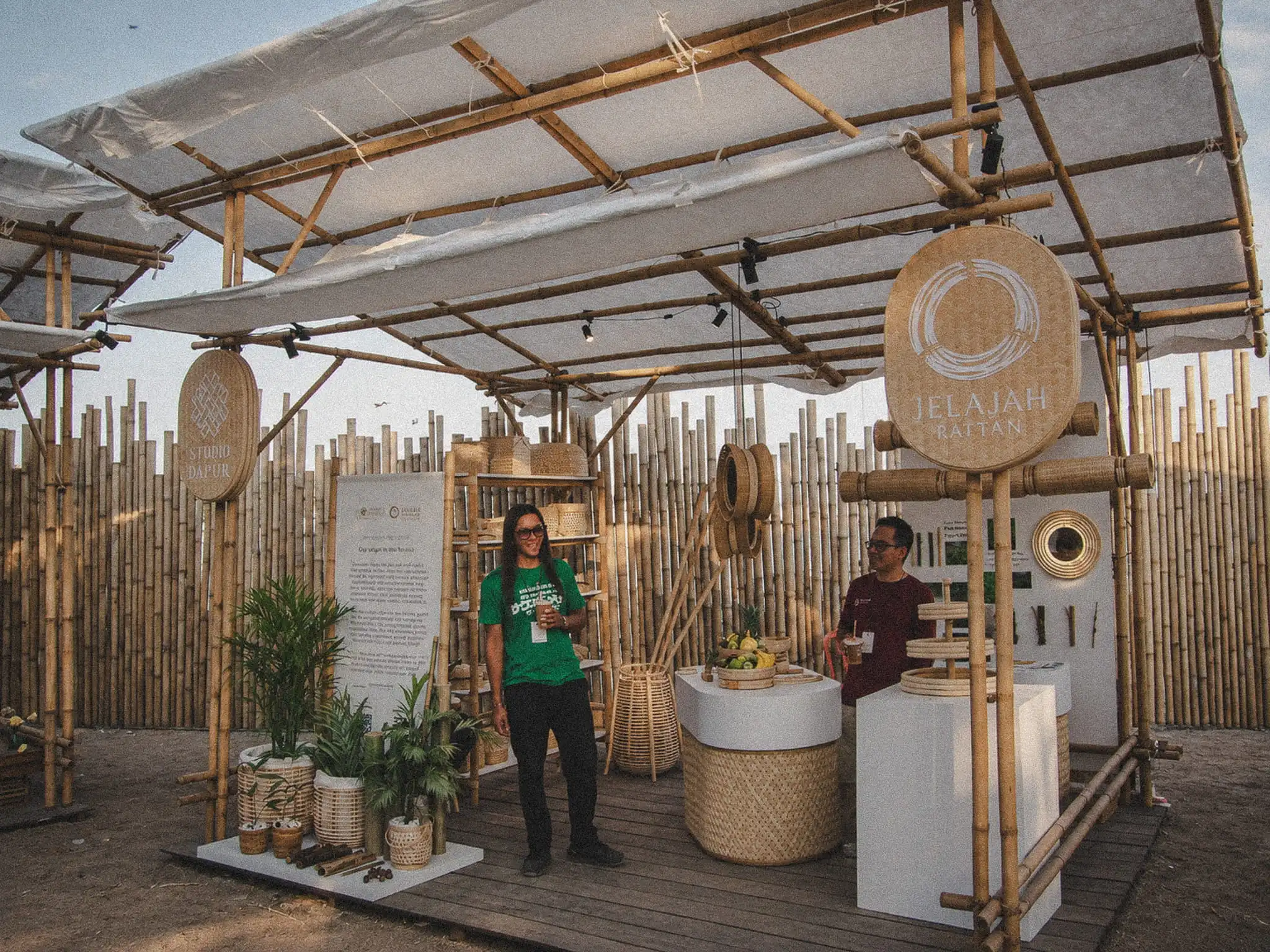
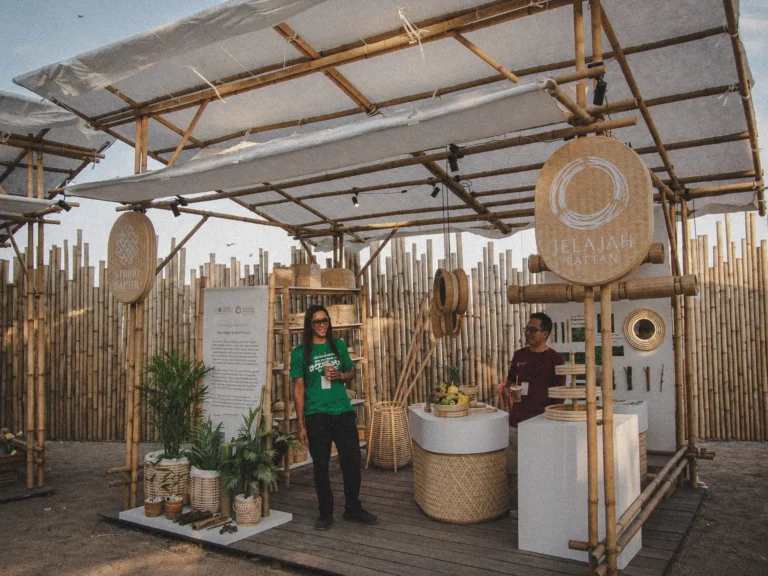
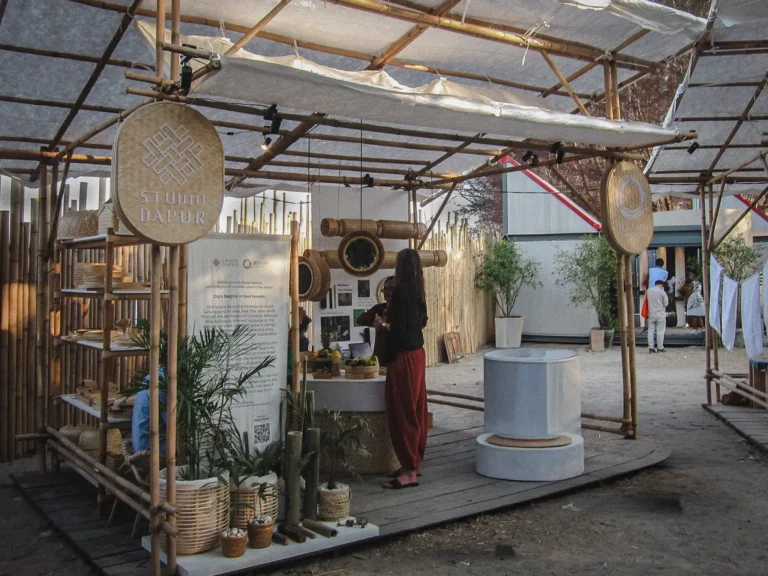
Jelajah Rattan × Studio Dapur’s Between Two Forests at JIA Curated 2026 | Photo: Des Res Bali
You know rattan. You’ve probably sat on it, eaten beside it, stored things in it or slept under a light woven from it. But could you identify a rattan plant growing in a forest?
We couldn’t either.
That was one of the more unexpected little lessons to come out of JIA Curated, where West Java’s Studio Dapur and Jelajah Rattan came together for Between Two Forests, a collaboration exploring two materials that often inhabit the same interiors but begin life very differently: bamboo and rattan.
Rattan isn’t a tree or a bamboo-like cane growing neatly from the ground. It’s a climbing palm — a long, flexible vine that uses the surrounding forest to make its way upward. For Jelajah Rattan, which works with sustainably harvested rattan from Sumatra, understanding that living material and the ecosystem around it is fundamental to what comes afterward.
And what comes afterward gets surprisingly interesting.
Alongside the woven furniture and objects we associate with rattan, Jelajah is pushing the material into rather less expected territory. Using laminated techniques and chemical-free steaming, the company is developing structural forms, panels and breathable architectural surfaces — and even components for musical instruments.
Which explains the little rattan ukulele being passed around the booth at Jia.
It’s an interesting proposition: take one of Indonesia’s oldest and most familiar craft materials and ask what else it might be capable of. Not by separating it from where it came from, but by understanding that origin better.
Turns out, there’s quite a lot more to rattan than the chair.