There’s something slightly strange about a tropical interior that looks completely finished.
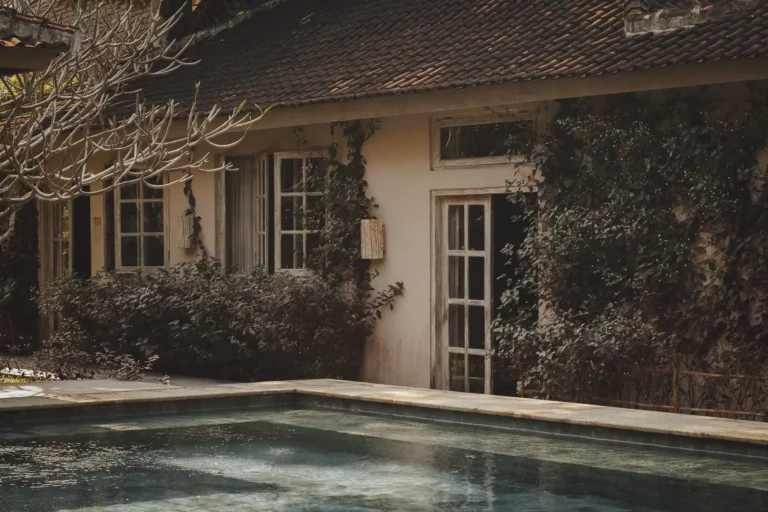
Maybe it’s because the tropics themselves aren’t particularly interested in behaving. Plants grow where they want to. Timber changes colour. Stone stains. Walls weather. Things migrate in from outside. And the spaces that seem to work best tend to leave a little room for all of that to happen.
That doesn’t mean embracing mess for the sake of it. It means resisting the urge to make everything match.
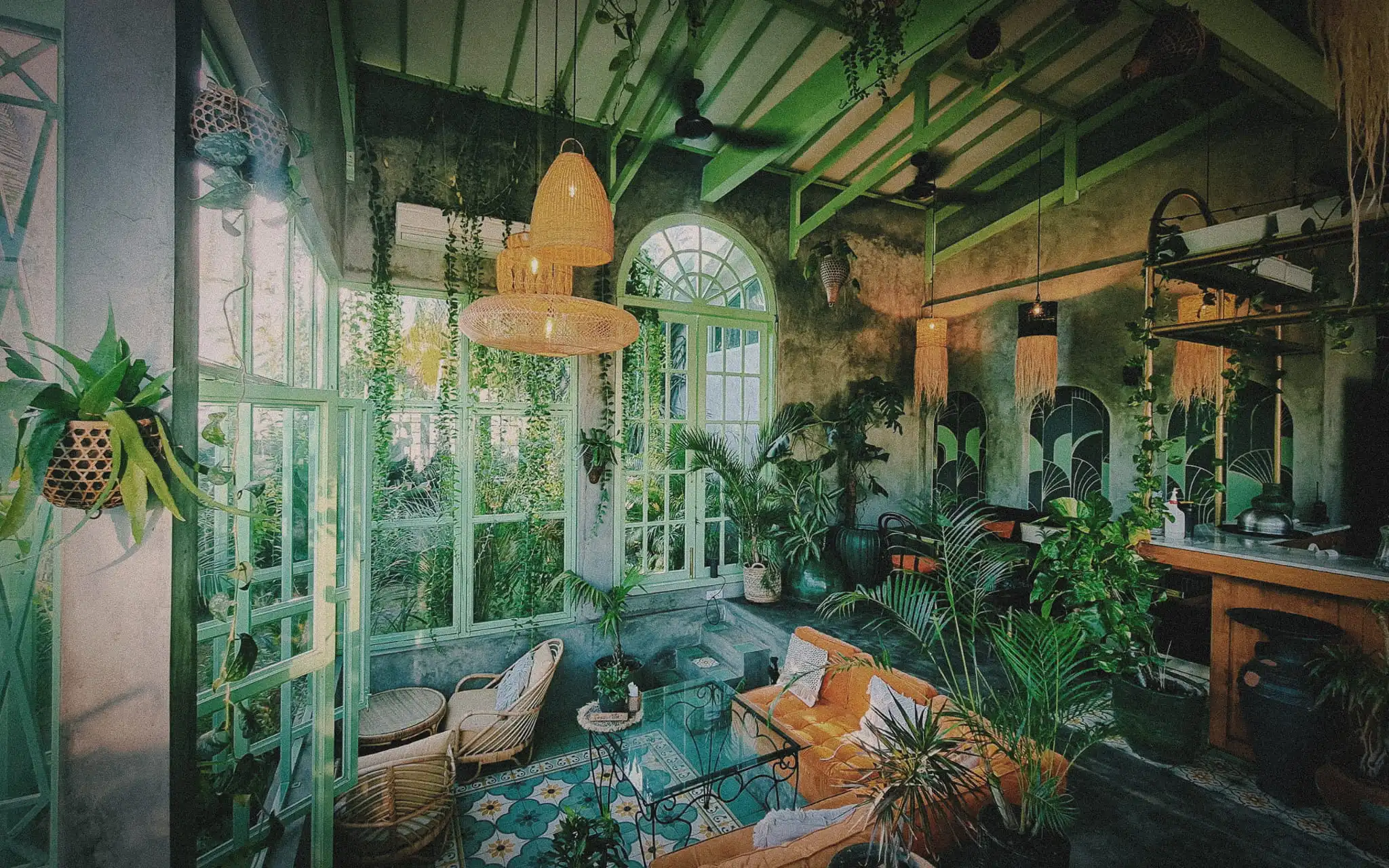
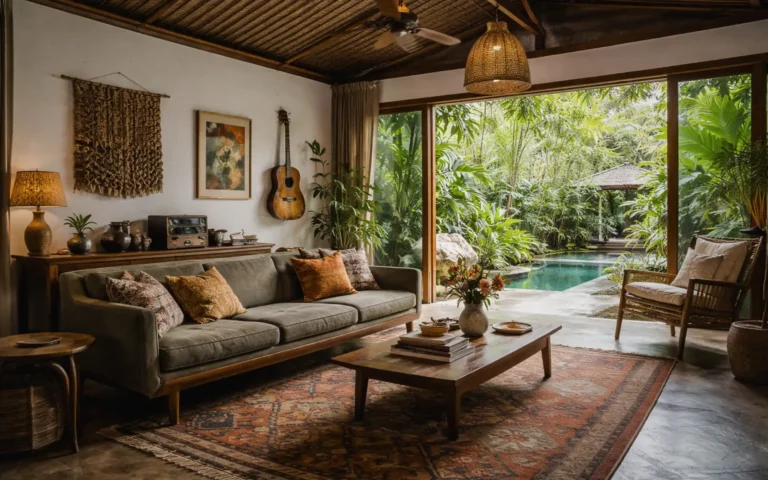
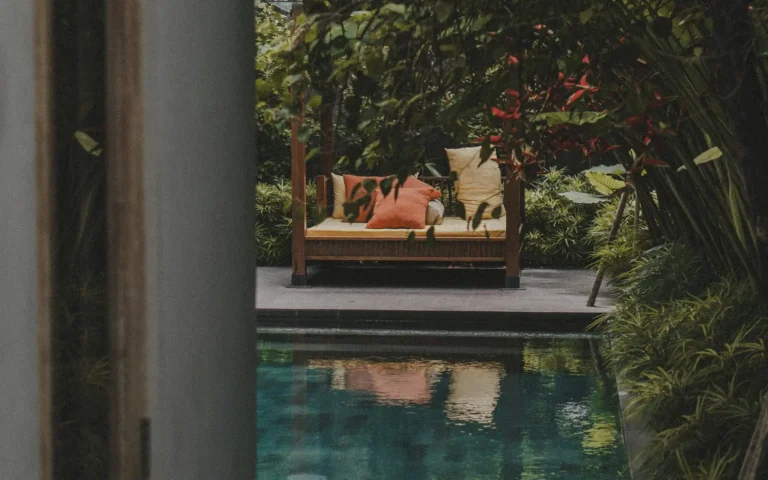
Some of the most memorable interiors in Bali — homes, cafés, restaurants and hotels alike — are layered rather than coordinated: old timber next to polished stone, patterned tiles under woven furniture, contemporary pieces mixed with things that have clearly been around for a while. Plants aren’t placed politely in a corner; they become part of the architecture.
The result can feel a little unruly. That’s often the point.
A Space Can Be Too Finished
There’s an understandable temptation when designing a tropical space to control all the variables. Pick a palette. Repeat the materials. Buy the furniture together. Keep the planting restrained.
It photographs beautifully.
But sometimes the spaces we want to spend time in are the ones that feel like they’ve evolved rather than been installed.
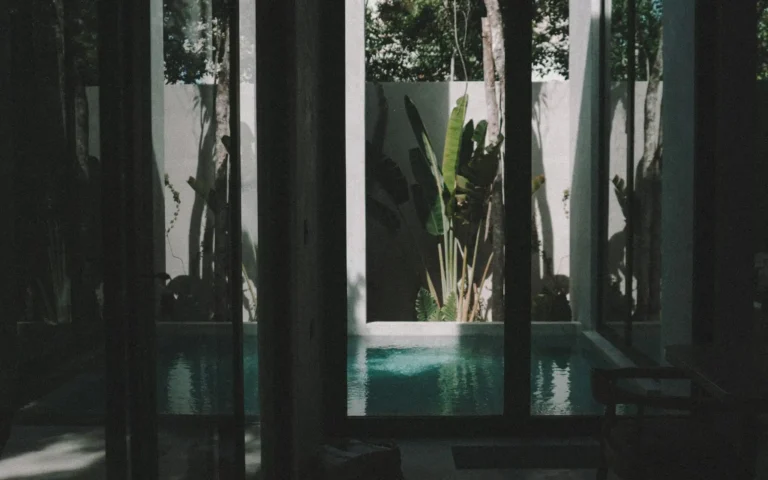
A chair moves. A plant gets enormous. Something fades in the sun. A strange object finds its way in and somehow works. The garden starts making its way inside.
Over time, the space gets better precisely because nobody is trying quite so hard to keep it perfect.
Let the Tropics In
Good tropical design has always been partly about surrender: to climate, landscape, weather and the fact that nature will eventually have its say.
Perhaps interiors deserve some of the same freedom.
Not everything needs to coordinate. Not every surface needs to stay pristine. And not every space needs to look finished.
Sometimes a little chaos is what makes it feel alive.