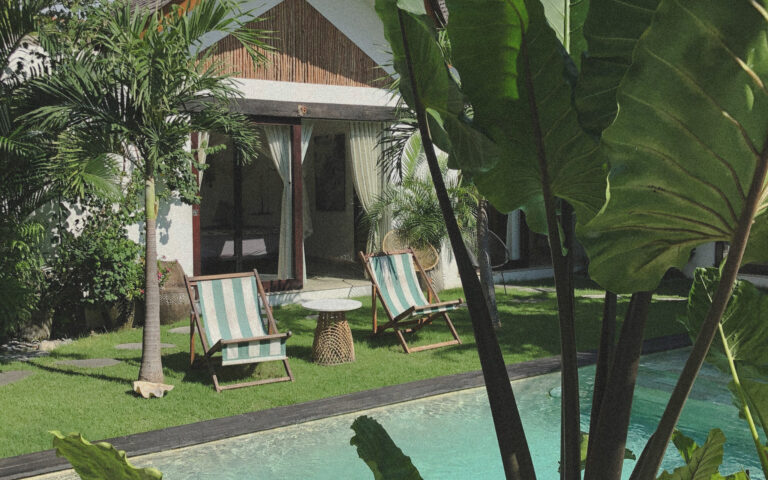
Why Biophilic Design Makes More Sense in Southeast Asia Than Almost Anywhere Else
By Des Res Bali
Spend enough time travelling through Southeast Asia and certain places just feel right.
The buildings people remember aren’t always the most expensive. They aren’t necessarily the tallest, the smartest, or the most technologically advanced either. More often than not, they’re the places where a morning coffee turns into an afternoon, where tropical rain becomes part of the experience rather than an inconvenience, or where a gentle breeze drifts through an open pavilion and makes air conditioning feel unnecessary. Nature doesn’t feel like decoration in these places. It feels inseparable from the architecture itself.
Today, we’d probably call that biophilic design. It’s become one of architecture’s favourite buzzwords, showing up everywhere from luxury hotels and wellness retreats to office high-rises and apartment complexes around the world. The language is new. The thinking isn’t.
In reality, long before biophilic design found its way into conference presentations and architectural awards, many communities across Southeast Asia had already been building in ways that embraced rather than resisted the natural world. Not because it was fashionable, but because it made sense.
Why the Tropics Change Everything
Climate isn’t just another consideration for architects in the tropics. It’s the design brief.
Heat, humidity, monsoon rains, changing light, seasonal winds and dense vegetation influence almost every decision worth making. Ignore them and buildings quickly become uncomfortable, inefficient and expensive to operate. Work with them, and architecture starts to feel almost effortless.
Tropical architecture has always faced a very different challenge from architecture in other parts of the world. In colder climates, buildings evolved to protect people from nature. Thick insulation, sealed windows, and enclosed interiors create refuge from freezing temperatures and harsh weather. In places like Southeast Asia, the goal has rarely been to keep nature out. It’s been to find a way to live comfortably alongside it.
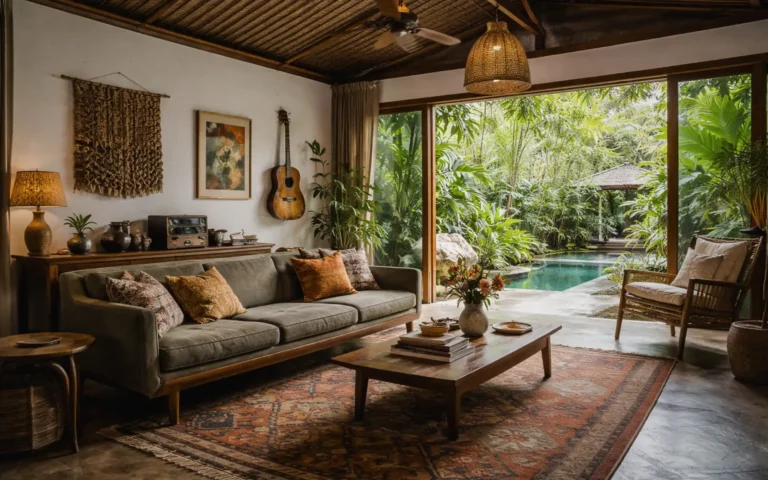
The most successful buildings in the tropics work with the climate rather than against it. Shade becomes more valuable than glass, cross ventilation often matters more than another layer of mechanical cooling, and a mature tree can completely change the way a space feels on a humid afternoon. Roofs stretch further, eaves become deeper, and indoor and outdoor spaces begin to blur, creating buildings that respond to the climate rather than in spite of it.
Maybe that’s why these spaces feel so instinctively comfortable. For more than 99% of human history, we evolved outdoors rather than inside sealed, mechanically controlled boxes. Maybe tropical architecture isn’t actually reconnecting us with nature. Maybe it’s reminding us of something we’ve always known.
Before Biophilic Design Had a Name
Across Southeast Asia, this way of thinking has taken many different forms.
Traditional Balinese compounds, for example, were never conceived as a single enclosed building. Instead, separate pavilions were arranged around landscaped courtyards, allowing air, light, vegetation and daily life to move naturally between indoor and outdoor spaces. Across Java, the iconic joglo developed its soaring roof not simply because it looked beautiful, but because it encouraged hot air to rise while creating generous shaded spaces beneath.
Travel a little further and the same quiet logic is still at work. Traditional Malay kampung houses were elevated above the ground to improve airflow, respond to seasonal flooding and create cooler living spaces. Vietnamese courtyard houses drew light and ventilation deep into dense urban neighbourhoods, while traditional Thai houses embraced raised platforms, deep verandahs and generous overhangs that softened long, humid summers and monsoon rains.
The details changed from one culture to another, but the thinking was consistent. Buildings weren’t expected to conquer the climate; they were expected to understand it. Air should move. Shade matters. Gardens belong beside daily life. Local materials weren’t a design statement—they were simply the obvious choice. Architecture worked with its surroundings because it had little choice.
None of this was driven by aesthetics alone, although the buildings are undeniably beautiful. These were practical solutions refined over generations through observation, experimentation and lived experience. These buildings weren’t early examples of biophilic design. They were just good responses to the places they were built.
Where Does the Building End?
One of the more subtle differences between a lot of tropical buildings and their Western counterparts is that it can be difficult to say exactly where the architecture ends and the landscape begins.
In so much of the Western world, the sequence feels familiar: garden, house, fence. Everything has its place, and the boundaries are usually pretty obvious.
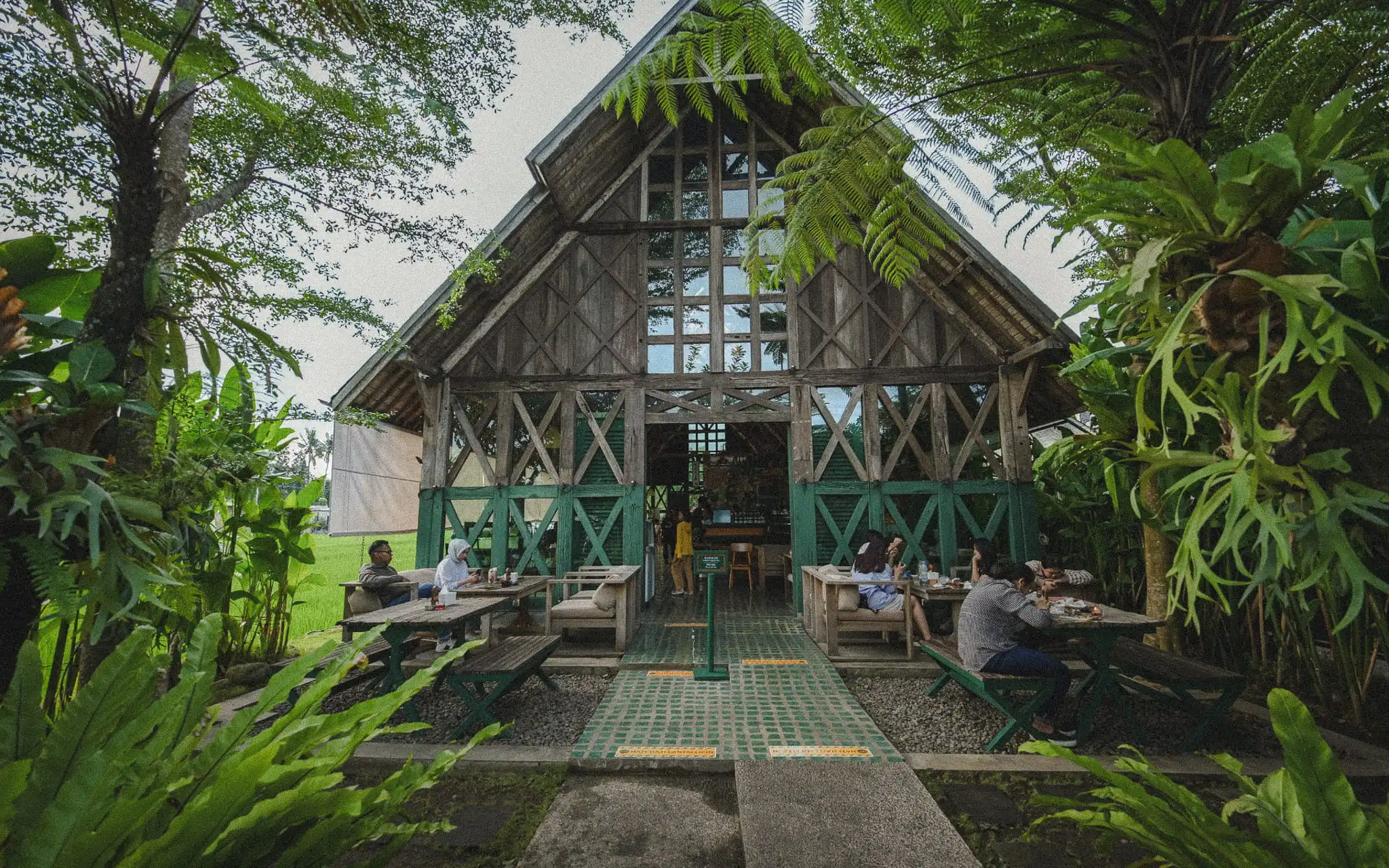
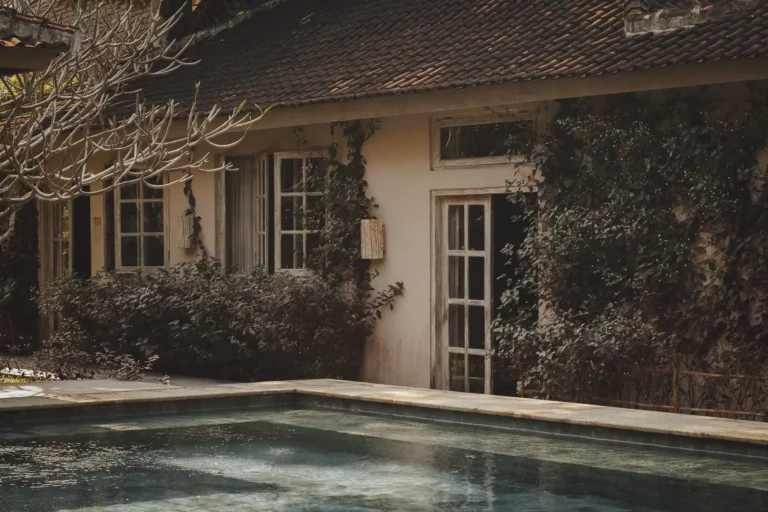
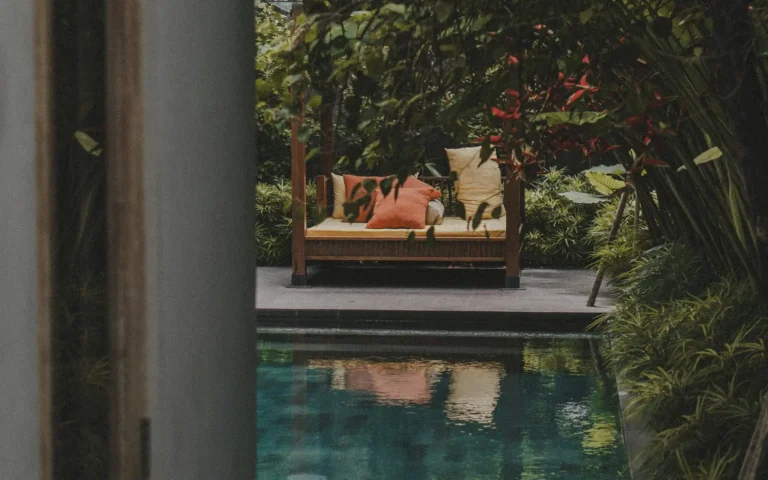
Travel around Southeast Asia and those edges get a little more blurry. Gardens become courtyards, courtyards become living rooms, living rooms spill onto terraces, and terraces drift into pavilions. Trees become part of the ceiling, while rain is treated less like an inconvenience and more like part of the experience. Even birds singing, insects chirping, shifting light, and the occasional afternoon breeze become everyday features of the space.
The result isn’t just more greenery. It’s a different relationship with nature, one where the landscape isn’t viewed through a window so much as lived alongside.
It's About More Than Plants
If biophilic design has an image problem, it’s probably this: people hear the term and immediately picture green walls, indoor trees, and enough designer greenery to keep the local nursery in business.
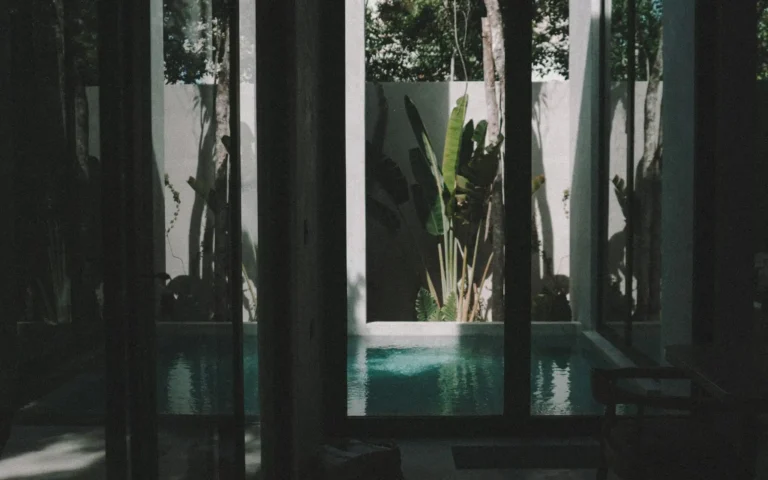
Plants definitely have their place, but good biophilic design is so much more than vegetation alone. It’s just as much about daylight that shifts throughout the day, materials that weather gracefully, textures that feel real rather than manufactured, and natural airflow that makes a space feel alive instead of mechanically controlled. It lives in the sound of rain on a roof, the movement of leaves, the speckled shade cast by an old tree, or the presence of water.
Sometimes a single, beautifully framed tree outside a window creates a stronger connection with nature than an entire lobby filled with ornamental greenery. Biophilic design isn’t really measured by the number of plants inside a building. It’s measured by how naturally people experience the world around them.
A City in Nature
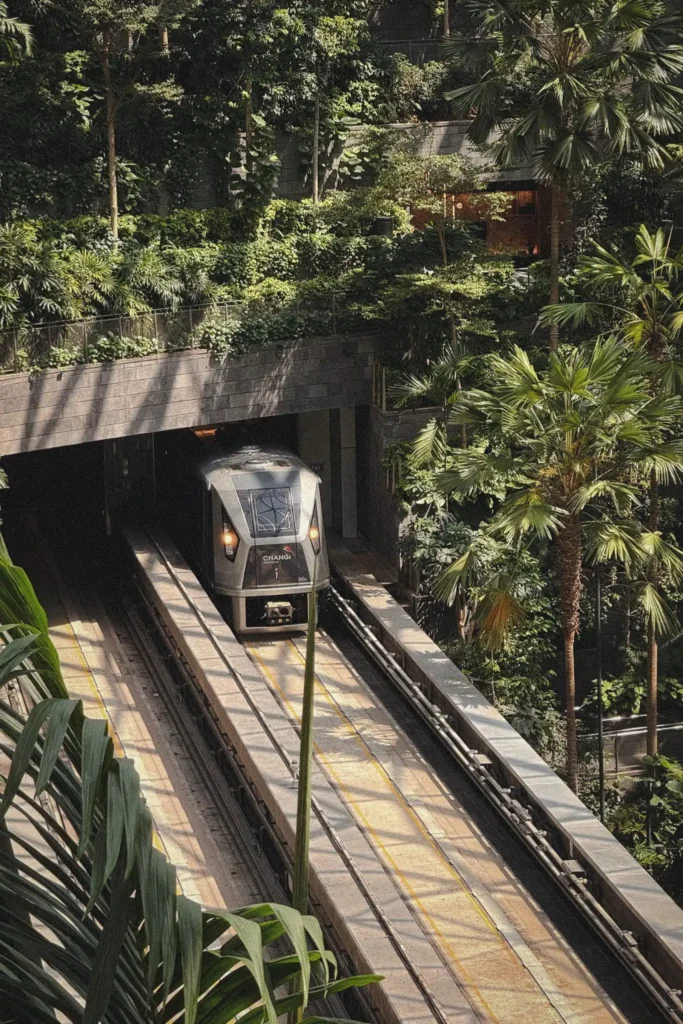
If there’s one city redefining what biophilic design looks like at an urban scale, it’s probably Singapore.
For decades, Singapore built its international reputation as the Garden City. Today, it’s evolving into something even more ambitious: a City in Nature. At first glance, it might sound like a subtle change in wording, but it reflects a much bigger shift in thinking.
Nature is no longer being treated as something to add once the city has been built. Increasingly, biodiversity, ecological corridors, rainwater management, and green infrastructure are becoming part of how the city functions from the outset. The vision extends well beyond parks alone, with ecological corridors linking habitats across the island, an expanding Park Connector Network bringing more residents within walking distance of green space, and skyrise greenery becoming part of the urban fabric itself.
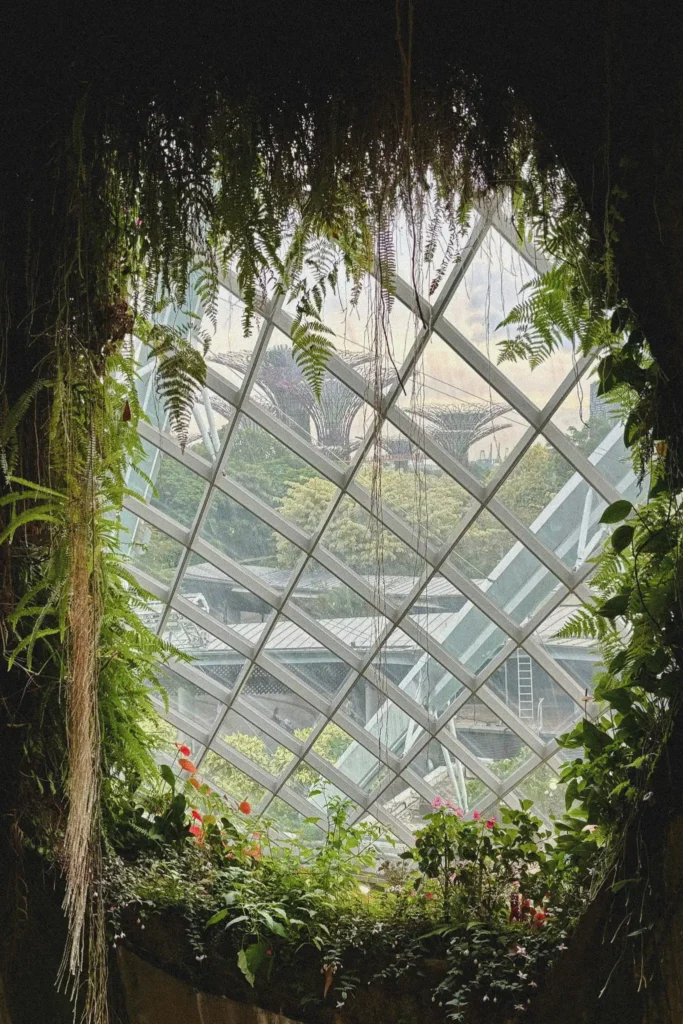
Projects like PARKROYAL COLLECTION Pickering, CapitaSpring, and Gardens by the Bay understandably attract most of the attention. They’re spectacular, and for good reason. PARKROYAL COLLECTION Pickering helped redefine what a high-rise hotel could look like, while Gardens by the Bay demonstrates that sustainability and landmark architecture don’t have to be separate ideas. Behind the scenes, its conservatories use energy-efficient cooling systems, while the Supertrees harvest solar energy, provide ventilation, and support the gardens’ environmental systems.
But the more interesting story is happening beyond the postcard moments, in neighbourhood planning, public housing, streetscapes, and long-term environmental policy.
Instead of asking how nature can make cities look greener, Singapore is increasingly asking how cities can function more like nature. It’s a subtle shift, but one that many rapidly growing tropical cities will be watching closely over the coming decades.

Where These Ideas Come to Life
Hospitality offers some of the clearest demonstrations of biophilic design in practice. Across Southeast Asia, luxury hotels, boutique resorts, and wellness retreats have embraced ideas that make spaces feel comfortable, calm, restorative, and connected to their surroundings. Guests likely wouldn’t describe them as examples of biophilic design, but they’re often drawn to the feeling these places create.
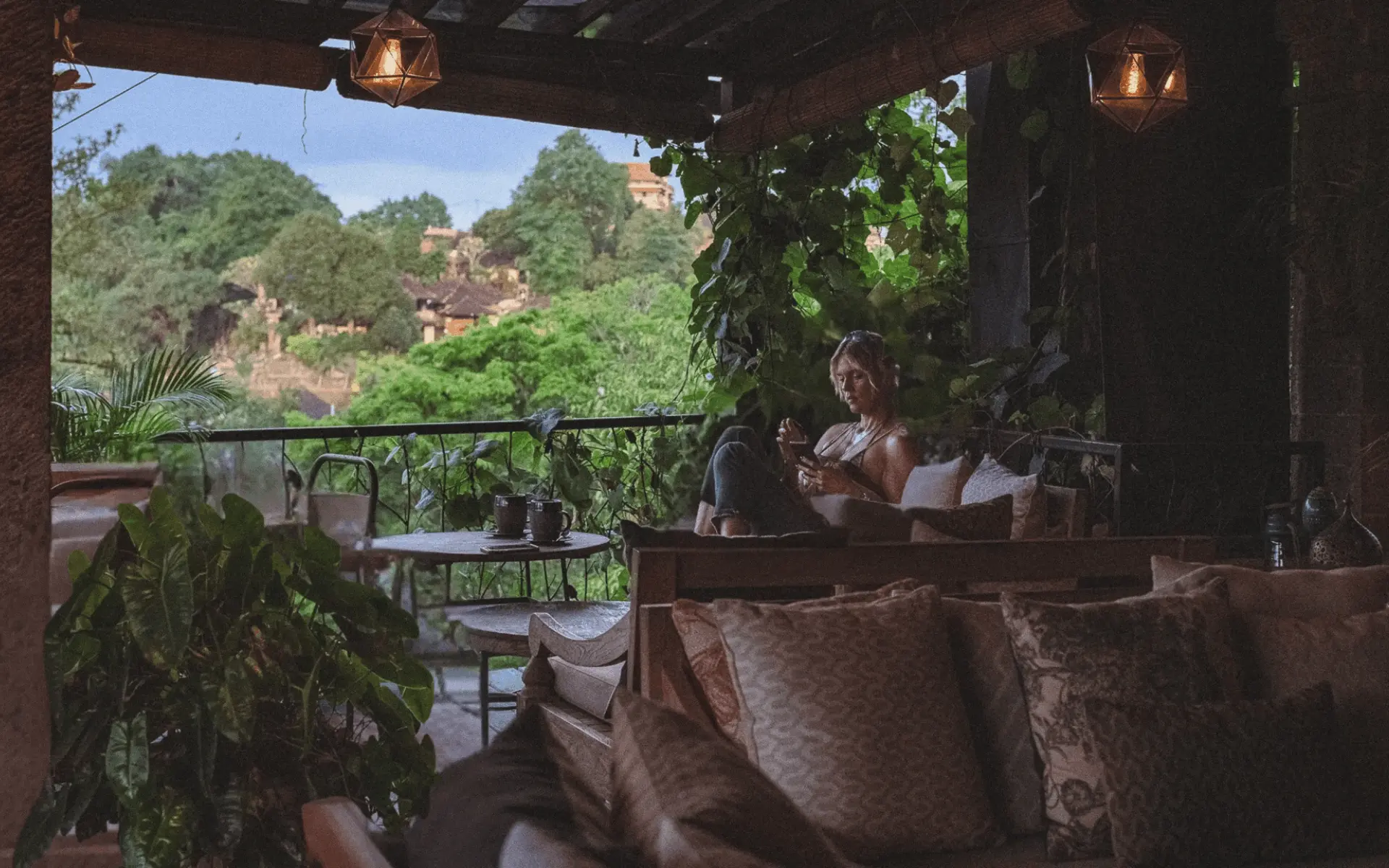
Whether it’s an open-air restaurant underneath mature trees in Ubud, a cliffside café in Uluwatu where the sea breeze keeps things surprisingly comfortable, or a jungle retreat tucked into the hills of northern Bali, the places people remember usually have one thing in common. They work with the environment instead of trying to shut it out.
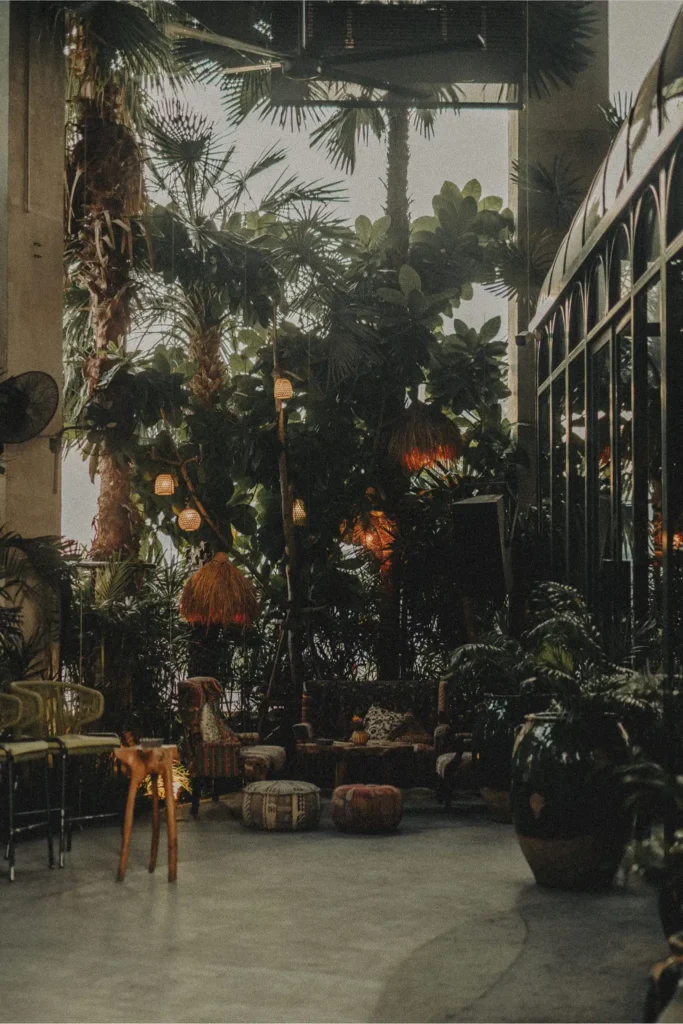
Some of Bali’s best hospitality venues illustrate this beautifully. Zest and Moksa in Ubud blur the line between architecture and garden through filtered light, open pavilions, generous planting, and natural ventilation. Further north in Munduk, Desa Eko extends the same thinking across an entire mountain retreat, where timber cabins, walking paths, and open communal spaces encourage guests to spend more time outdoors. At its farm-to-table restaurant, The Botanist, bamboo, valley views, and cool mountain air define the setting.
Even the rain is part of the experience. With well-designed roofs, generous overhangs, and good drainage, a tropical downpour adds atmosphere instead of becoming an inconvenience. The architecture isn’t fighting the climate—it’s working with it.
Designed for People
You don’t need to be an architect to notice how people naturally use space. Given the choice, most of us head for the shade. We pull our chairs towards the edge of a veranda, find a seat underneath a tree, or spend more time where the light is soft, the air moves, and the temperature feels comfortable.
There’s growing evidence that spending time in nature can reduce stress, improve concentration, and contribute to overall wellbeing. Long before researchers started measuring those things, though, people already knew that some environments simply felt better than others.
That’s exactly what so much of Southeast Asia’s traditional architecture was responding to. Filtered sunlight, moving air, water nearby, natural materials, and plenty of shade aren’t there to make buildings look nice. They’re practical responses to climate that also happen to create places people love spending time in.
More than a Trend
Biophilic design may be having a moment globally, but across Southeast Asia its underlying principles have shaped architecture for centuries.
As the region’s cities continue to grow, those ideas feel just as relevant as ever. Buildings will become smarter, materials more sophisticated, and technology more deeply embedded in the built environment. But some of the best ideas don’t become obsolete. They simply find new language.
At its best, architecture doesn’t compete with the landscape. It works with it. And the buildings that do that rarely go out of style.